
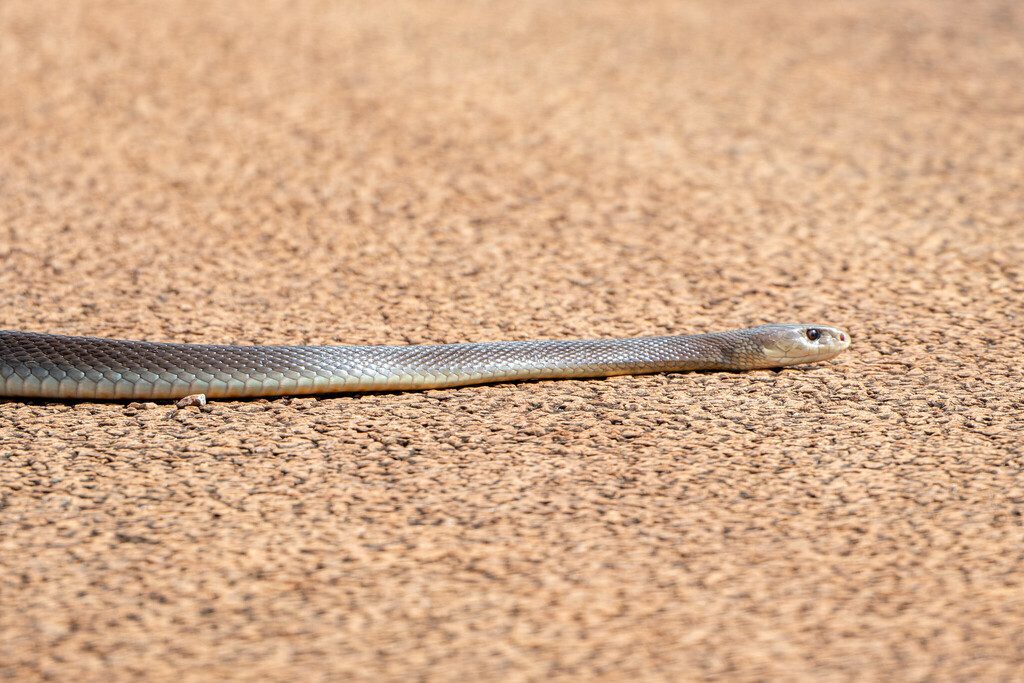
Photo: no rights reserved · CC0 · iNaturalist
Coastal Taipan
Oxyuranus scutellatus
Longest fangs of any Australian snake. Uncommon this far south — and most SEQ "taipans" are Eastern Browns.
- Length
- 1.5–2 m, to ~3 m
- Active
- Diurnal
- Habitat
- Coastal woodland, cane fields, grassland
- Diet
- Rats, bandicoots, small mammals
- Status
- Protected wildlife — licensed handlers only
Compare before you decide. Never act on an identification made from a photo or a guide, including this one.
Do not wash the bite, do not apply a tourniquet and do not try to catch the snake. Keep the person still, apply a pressure immobilisation bandage if you have one, and get emergency help immediately.
Native reptiles are protected wildlife. Taking, handling, moving or harming one without the appropriate permit is an offence under Queensland's Nature Conservation Act 1992 and carries significant penalties — as well as being the fastest way to get hurt.
The Coastal Taipan is among the most venomous snakes in the world and the largest venomous snake in Australia. It has the longest fangs of any Australian snake and a reputation, deserved, as an animal to be given a very wide berth.
It needs a note on range. Taipans are a coastal Queensland species that becomes steadily more common the further north you go. South East Queensland sits near the southern limit of that range, so encounters here are uncommon and are far outnumbered by Eastern Browns — which are frequently reported as taipans.
Uncommon is not the same as absent, and the consequences of getting this one wrong are severe enough that it belongs in the guide.
About the Coastal Taipan
This is a large, powerfully built but athletic snake, typically 1.5 to 2 metres with records approaching 3 metres.
Colour ranges from light russet-brown through dark brown to nearly black, and many individuals become noticeably paler toward the head and forebody. The belly is cream to yellow, usually flecked with orange or pink.
The head is the most useful feature: long, narrow and rectangular, clearly distinct from the neck, and often distinctly paler — sometimes almost cream — compared with the body. The eye is large with a reddish-brown iris.
Habitat
Where can you find a Coastal Taipan?
Taipans favour open, warm country with plenty of rodents:
- coastal woodland and open forest
- sugarcane fields and cane-growing districts
- grassland and grazing country
- rubbish tips and disused buildings
- monsoon forest and vine thicket margins
The association with cane fields is well known and comes down to rats. Anywhere rodent numbers are high is potential taipan habitat within its range.
Venom
Is the Coastal Taipan dangerous?
Extremely. The Coastal Taipan is one of the most dangerously venomous snakes in the world, with a highly neurotoxic venom that also affects blood clotting and muscle tissue.
It has fangs of around a centimetre, the longest of any Australian snake, and a defensive response that involves several rapid bites rather than a single strike. Before effective antivenom existed, a bite from this species was very close to uniformly fatal.
Antivenom is available and effective. The priority is getting there quickly: apply a pressure immobilisation bandage, keep the person absolutely still, and call 000 immediately.
Diet
What does the Coastal Taipan eat?
Taipans are mammal specialists and active hunters:
- rats and mice
- bandicoots
- other small mammals
- occasionally birds
Unlike species that hold their prey, a taipan typically strikes, releases and follows — letting the venom do the work before returning to feed.
Behaviour
What should you know about this species?
Coastal Taipans are diurnal, particularly in the early morning, shifting to dawn and dusk activity in hot weather. They are fast, alert, and have excellent eyesight.
They are nervous rather than aggressive, and their strong preference is to escape. A cornered taipan is a different proposition: it will raise its forebody, flatten its head, and deliver several bites in quick succession.
In South East Queensland, most snakes reported as taipans turn out to be Eastern Browns. That does not make the caution wrong — treating an unidentified large brown snake as a taipan and keeping well clear is exactly the right response.
What to do if you see a Coastal Taipan
Move away immediately and take everyone with you. Do not attempt to confirm the identification by getting closer, and do not attempt to photograph it from anywhere near it.
Get pets inside. Keep the area clear and, if you can do so from a genuinely safe distance, note where the snake went.
Call a licensed snake catcher and say clearly that you believe it may be a taipan. That changes how we prepare and how quickly we come.
Contributed photographs, reused under Creative Commons licences. Colour and pattern vary a lot between individuals — compare several before settling on an ID.
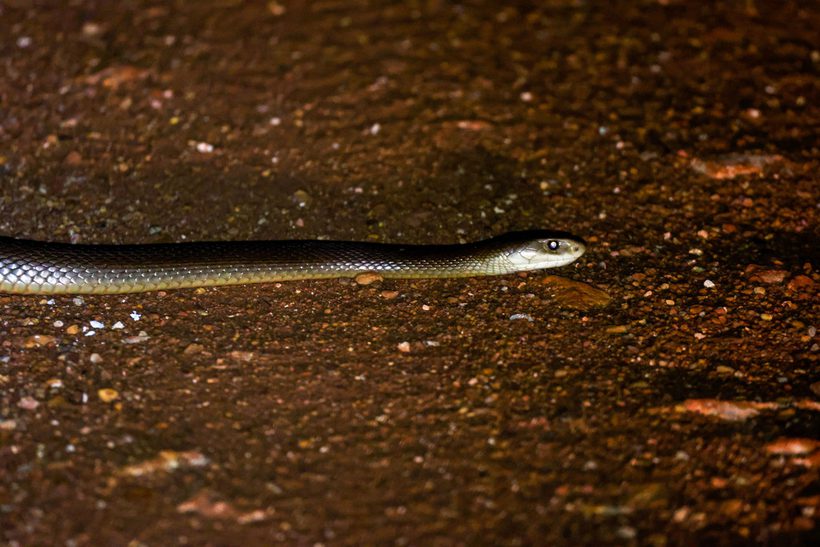
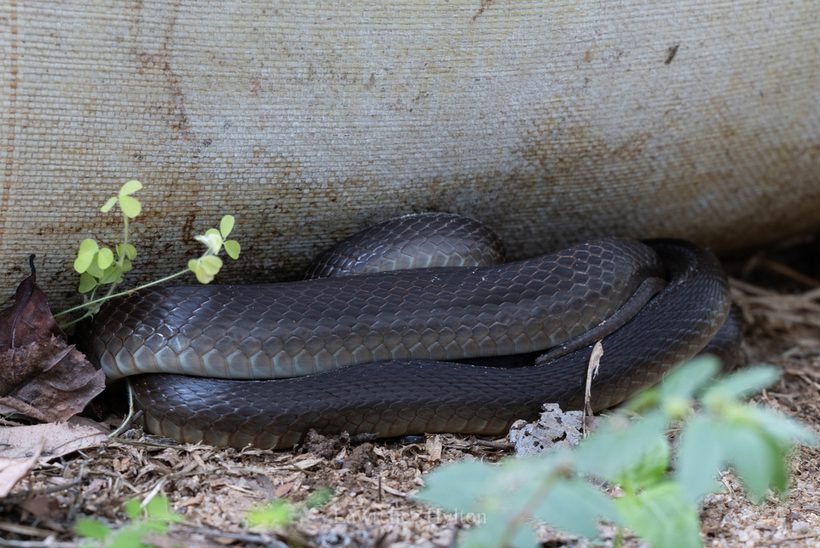
Photo: Tom Field · CC BY 4.0 · iNaturalist
Photo: Lawrence Hylton · CC BY 4.0 · iNaturalist
Asked on
most call-outs.
Are there taipans in South East Queensland?
How do you tell a taipan from an Eastern Brown Snake?
How dangerous is a taipan bite?
Are taipans aggressive?
Why are they associated with cane fields?
What should I do if I think I have seen one?
Call or text — a licensed handler will talk you through it. If someone has been bitten, call 000 first.