
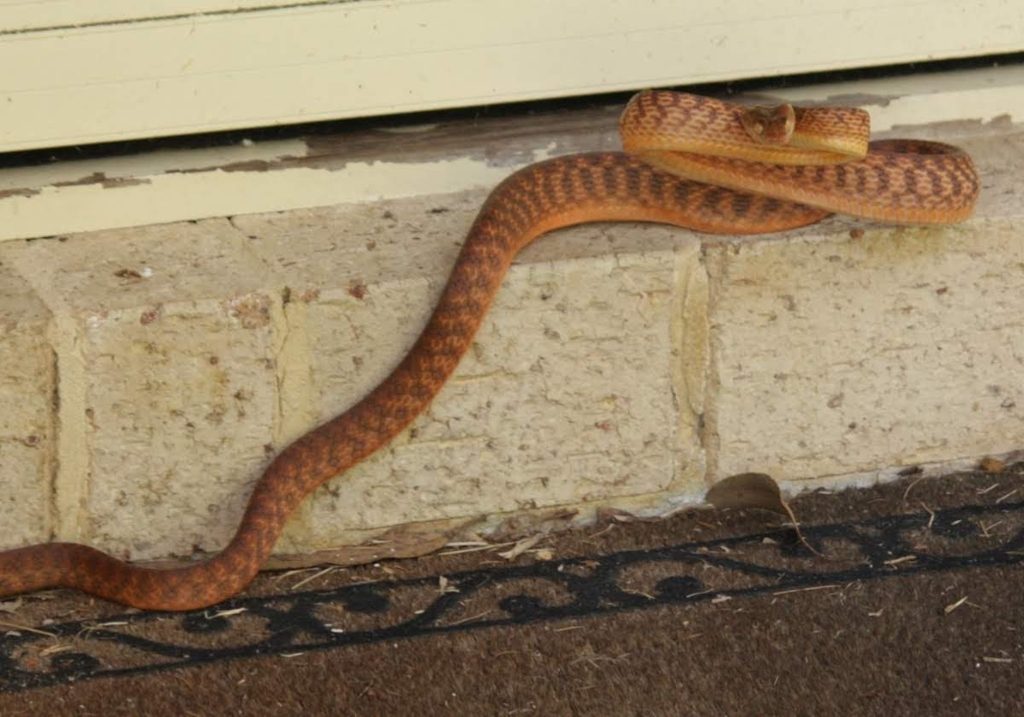
Photo: Sam Stainsby · CC BY 4.0 · iNaturalist
Brown Tree Snake
Boiga irregularis
Also known as: Night Tiger
The "Night Tiger" — a huge head on a whip-thin neck, vertical pupils, and a taste for aviaries.
- Length
- 1.2–2 m
- Active
- Nocturnal
- Habitat
- Roofs, aviaries, sheds, trees
- Diet
- Birds and eggs, geckos, bats
- Status
- Protected wildlife — licensed handlers only
Compare before you decide. Never act on an identification made from a photo or a guide, including this one.
Do not wash the bite, do not apply a tourniquet and do not try to catch the snake. Keep the person still, apply a pressure immobilisation bandage if you have one, and get emergency help immediately.
Native reptiles are protected wildlife. Taking, handling, moving or harming one without the appropriate permit is an offence under Queensland's Nature Conservation Act 1992 and carries significant penalties — as well as being the fastest way to get hurt.
The Brown Tree Snake, often called the Night Tiger, is one of the most frequently encountered snakes around Sunshine Coast homes after dark. It is a slender, highly agile climber with an unmistakable silhouette: a large head on a very thin neck, and enormous eyes with vertical, cat-like pupils.
It is mildly venomous but is not considered dangerous to humans. It is, however, one of the more defensive snakes we deal with, and it will put on a considerable display if cornered.
Most call-outs for this species involve aviaries, chook pens and roof spaces — anywhere birds, eggs or geckos are available at night.
About the Brown Tree Snake
Brown Tree Snakes are long and very slender, usually between 1.2 and 2 metres, with a body that looks almost too thin for the head it carries.
Colour ranges from pale reddish-brown or cream through to darker brown, marked with narrow darker cross-bands along the body. Northern individuals — the ones people call Night Tigers — can be strongly banded in rich orange-red and black. The belly is cream to salmon pink.
The head is broad and clearly distinct from the neck, and the eyes are disproportionately large with vertical pupils, which is a reliable feature: no dangerously venomous land snake in South East Queensland has a vertical pupil like this.
Habitat
Where can you find a Brown Tree Snake?
This species is thoroughly at home in both bushland and built-up areas, and it climbs exceptionally well. Common places to find one include:
- rainforest, wet forest and woodland
- roof cavities and wall spaces
- aviaries, chook pens and bird cages
- sheds, carports and pergolas
- trees, hedges and dense garden vegetation
They will happily climb brickwork, downpipes, fences and vines. If a snake is found high up in a structure at night on the Sunshine Coast, this species is one of the first candidates.
Venom
Is the Brown Tree Snake dangerous?
The Brown Tree Snake is mildly venomous and is not considered dangerous to humans. Its fangs sit toward the back of the mouth and it does not deliver venom efficiently in a defensive bite.
It does bite readily, though. A cornered Brown Tree Snake will draw its forebody into a series of tight S-shaped loops, strike repeatedly and with real commitment, and generally make its feelings clear. Bites can cause local pain and swelling.
As with any snake bite in Australia, get it assessed medically. This species is also easily mistaken for others in poor light, and a bite identified in the dark by the person bitten is not a confirmed identification.
Diet
What does the Brown Tree Snake eat?
This species is an accomplished nocturnal hunter with excellent night vision. Prey includes:
- birds and nestlings
- birds' eggs
- geckos and other lizards
- small mammals and bats
- frogs
Aviaries are a particular problem. A Brown Tree Snake can get through a surprisingly small gap, and mesh that keeps birds in will not necessarily keep a snake out. If you keep birds, check the enclosure for gaps at ground level, around doors and where the mesh meets the frame.
Behaviour
What should you know about this species?
Brown Tree Snakes are strictly nocturnal. During the day they shelter in tree hollows, roof spaces, dense foliage and wall cavities, and emerge after dark to hunt.
They are among the most capable climbers of any snake in the region, able to bridge gaps and hold their own body weight horizontally off a branch or a beam.
Their defensive display is dramatic and often alarms people far more than the actual risk warrants. A striking, hissing Brown Tree Snake looks like a serious problem and is, in practice, a mildly venomous snake having a very bad evening.
What to do if you see a Brown Tree Snake
Keep your distance and leave it alone. If it is moving through the garden at night, it will most likely be gone by morning.
If it is in an aviary, a roof space or a chook pen, call a licensed snake catcher — do not reach in after it. A snake that has eaten inside an enclosure may not be able to get back out, and will be defensive.
Afterwards, look at how it got in. Snake-proofing the enclosure is the only thing that stops it happening again.
Contributed photographs, reused under Creative Commons licences. Colour and pattern vary a lot between individuals — compare several before settling on an ID.
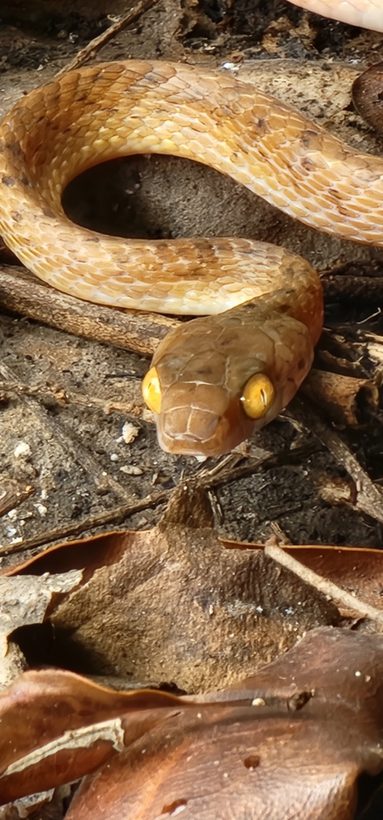
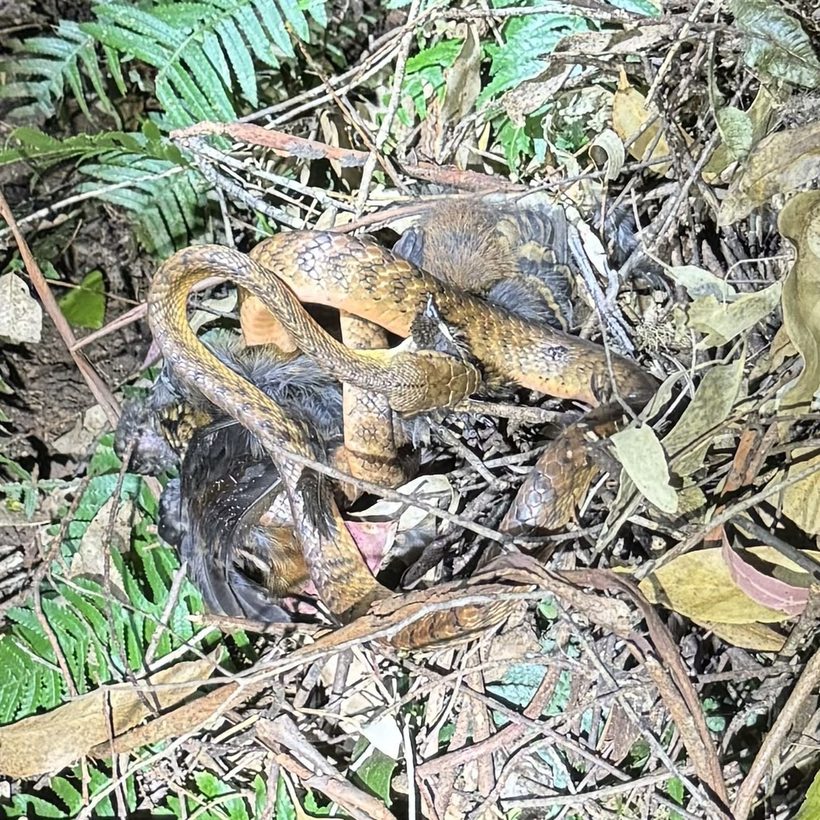
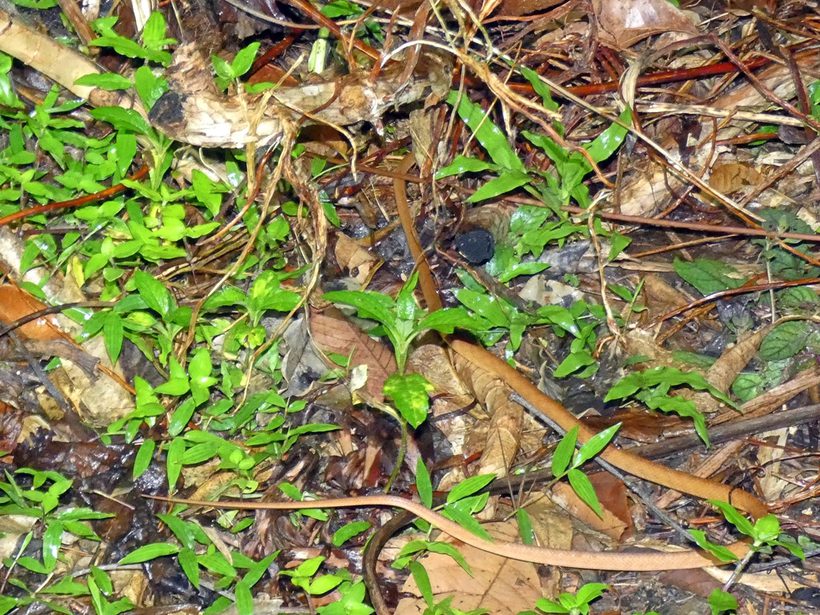
Photo: no rights reserved · CC0 · iNaturalist
Photo: Sockrosma · CC BY 4.0 · iNaturalist
Photo: Kai Squires · CC BY 4.0 · iNaturalist
Asked on
most call-outs.
How do you identify a Brown Tree Snake?
Why is it called a Night Tiger?
Are Brown Tree Snakes dangerous?
Why do they keep getting into my aviary?
Will it hurt my pet bird or chickens?
Is it the same snake that caused problems in Guam?
Call or text — a licensed handler will talk you through it. If someone has been bitten, call 000 first.