
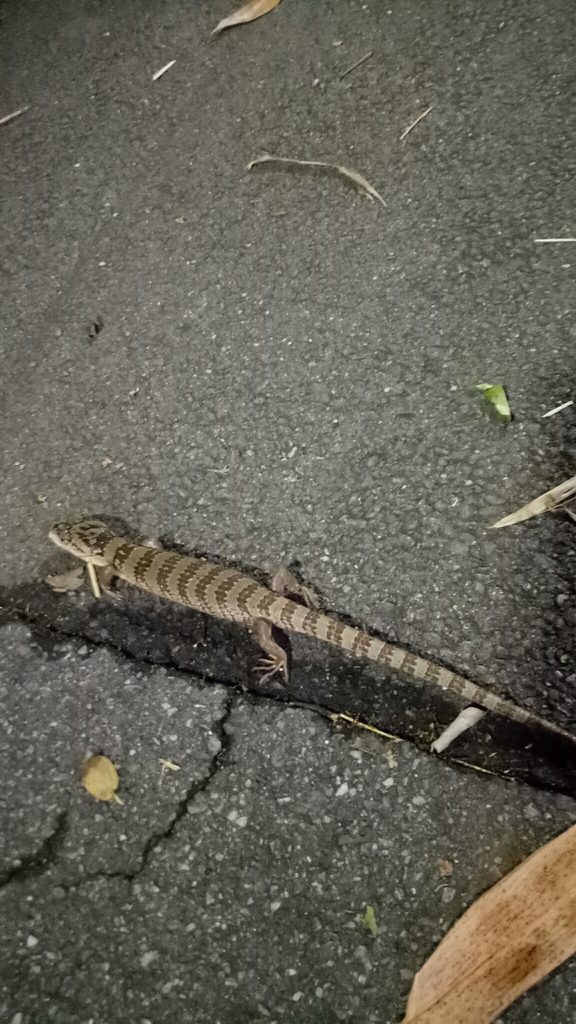
Photo: no rights reserved · CC0 · iNaturalist
Pink-tongued Skink
Cyclodomorphus gerrardii
A slender, banded, night-active relative of the blue-tongue that eats little but snails — and dies of snail bait.
- Length
- to ~45 cm
- Active
- Nocturnal
- Habitat
- Damp mulched gardens, rainforest, low shrubs
- Diet
- Snails and slugs, almost exclusively
- Status
- Protected wildlife — licensed handlers only
Compare before you decide. Never act on an identification made from a photo or a guide, including this one.
Legless lizards are protected in Queensland exactly as snakes are. Taking, handling, moving, keeping or harming one without the appropriate permit is an offence under the Nature Conservation Act 1992, and penalties are substantial.
That applies whether or not you believed it was something else at the time. Killing a native reptile because you were unsure what it was is not a defence — and it is how a great many people are hurt by the ones that can hurt them.
If you cannot identify it, photograph it from a safe distance and send it to us. There is no penalty for asking.
The Pink-tongued Skink is a slender, banded, nocturnal relative of the blue-tongue, and one of the more specialised lizards in South East Queensland — it eats almost nothing but snails and slugs.
It is completely harmless. It is also regularly reported as a juvenile blue-tongue, which is understandable: the two are related, similar in pattern, and the tongue colour is the reliable difference.
Because of what it eats, it is exceptionally vulnerable to snail bait, and that is the single most useful thing to know about it.
About the Pink-tongued Skink
Adults reach around 45 centimetres, noticeably more slender than a blue-tongue, with a longer tail that is semi-prehensile and used for climbing.
The body is grey to fawn or pale brown with a series of clean dark cross-bands along the back and tail, usually much more sharply defined than a blue-tongue's. Juveniles are more strongly marked than adults, and often have a dark head.
The tongue is pink rather than blue. Young animals may have a bluish tongue that turns pink as they mature, which is exactly why juveniles get reported as blue-tongues.
Habitat
Where can you find a Pink-tongued Skink?
This species prefers moist, well-vegetated places:
- rainforest and wet sclerophyll forest
- creek gullies and damp bushland
- well-mulched suburban gardens
- under logs, rocks and dense ground cover
- low vegetation and shrubs, which it climbs readily
They shelter by day under cover and forage at night, and they are considerably more arboreal than a blue-tongue — that long tail is used for gripping branches.
Venom
Is the Pink-tongued Skink dangerous?
No. It has no venom and poses no risk to anyone.
A frightened one will flatten its body, hiss and open its mouth in the same bluffing display its blue-tongued relatives use. It is all show.
It is protected native wildlife, and taking or moving one without a permit is an offence.
Diet
What does the Pink-tongued Skink eat?
This is a specialist, and the specialisation matters:
- snails, above all else
- slugs
- occasionally other soft-bodied invertebrates
Its jaws and teeth are adapted to crushing snail shells, and snails make up the overwhelming majority of what it eats. **That makes snail bait lethal to this species** — a Pink-tongued Skink in a garden where pellets are used will eat poisoned snails and die. If you have one, you do not need the pellets.
Behaviour
What should you know about this species?
Pink-tongued Skinks are largely nocturnal, emerging on warm and humid nights, and are most often seen after rain.
They climb well for a skink of this build, using the tail for grip, and are often found in shrubs and low branches rather than on the ground.
They are uncommon enough that a garden with a resident Pink-tongued Skink is doing something right — damp, mulched, densely planted, and free of poison.
What to do if you see a Pink-tongued Skink
Leave it alone and stop using snail pellets. Those are the two things that matter.
If you are unsure whether you have a Pink-tongued Skink or a juvenile blue-tongue, either is harmless and either wants the same thing from you, so there is no urgency — but we are happy to identify one from a photo.
Call us if it is injured or a pet has caught it. As with all reptiles, an animal that a cat or dog has had in its mouth needs attention even when it looks unharmed.
Contributed photographs, reused under Creative Commons licences. Colour and pattern vary a lot between individuals — compare several before settling on an ID.
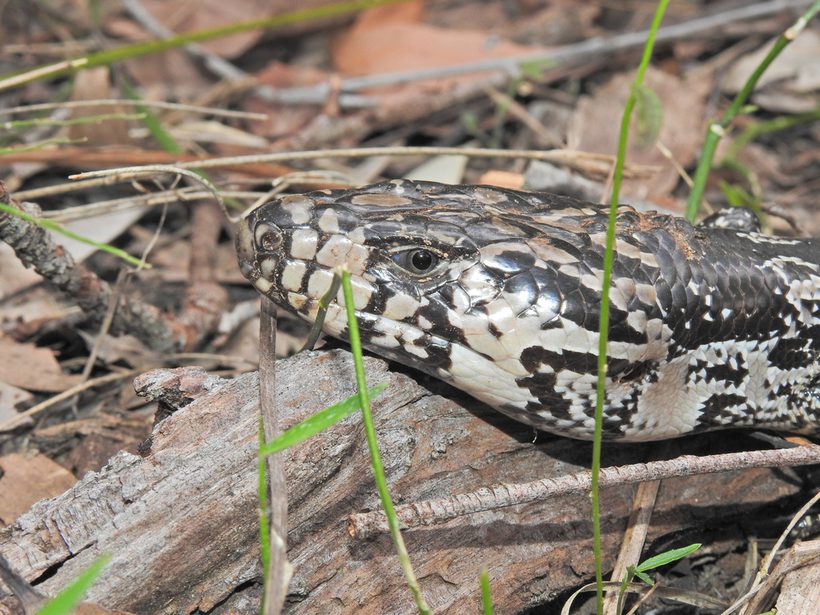
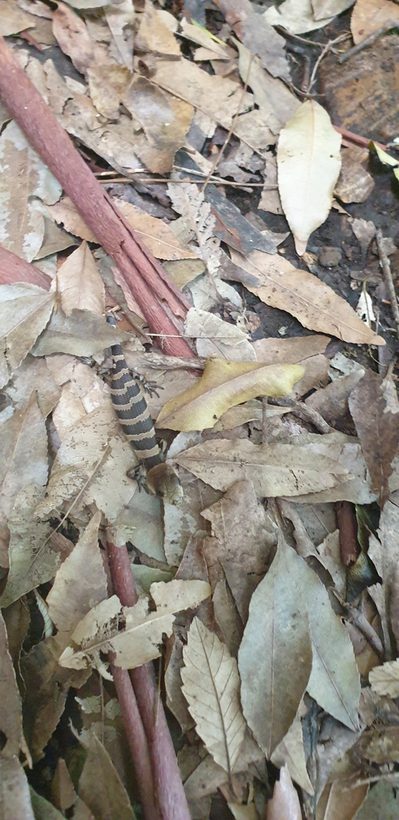
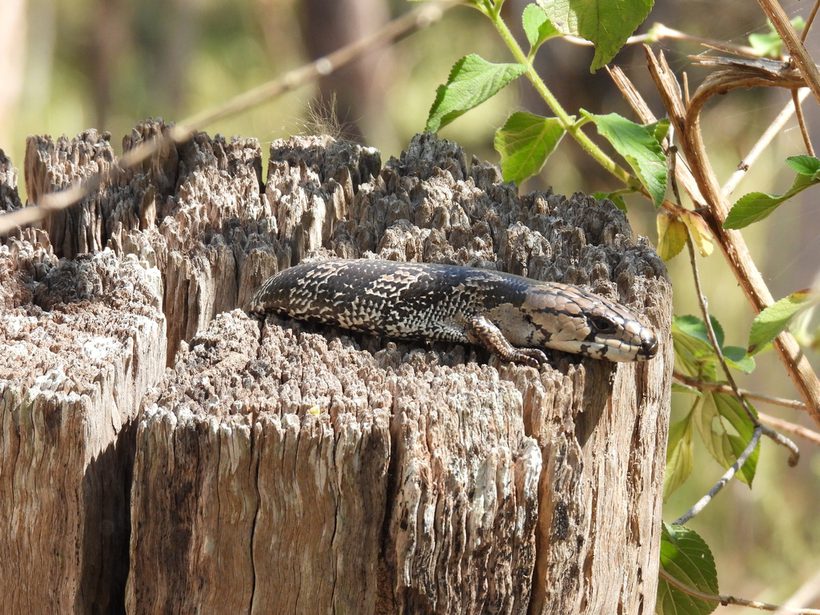
Photo: Scott W. Gavins · CC BY 4.0 · iNaturalist
Photo: Martin Rady · CC BY 4.0 · iNaturalist
Photo: Mark Clarke · CC BY 4.0 · iNaturalist
Asked on
most call-outs.
How is it different from a blue-tongue?
Is the Pink-tongued Skink dangerous?
Does snail bait really kill them?
Where would I be likely to find one?
Can it climb?
It's eating all my snails — is that a problem?
Call or text — a licensed handler will talk you through it. If someone has been bitten, call 000 first.