
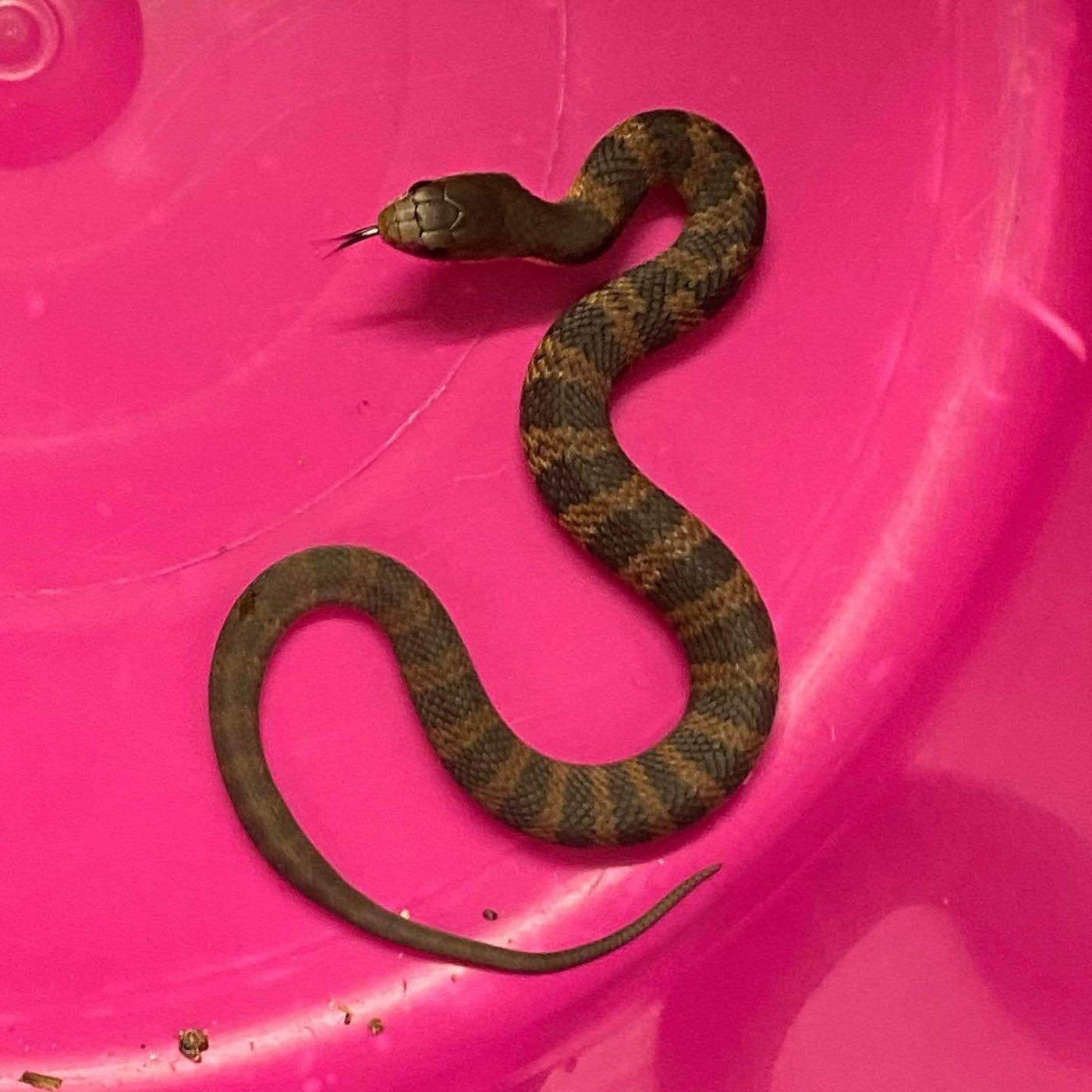
Tiger Snake
Notechis scutatus
Far more common in the south, but medically significant wherever it turns up. Treat every sighting with caution.
- Length
- 1.2 m, to over 2 m
- Active
- Mainly diurnal
- Habitat
- Wetlands, swamps, riverbanks, dams
- Diet
- Frogs, fish, lizards, birds, small mammals
- Status
- Protected wildlife — licensed handlers only
Do not wash the bite, do not apply a tourniquet and do not try to catch the snake. Keep the person still, apply a pressure immobilisation bandage if you have one, and get emergency help immediately.
Native reptiles are protected wildlife. Taking, handling, moving or harming one without the appropriate permit is an offence under Queensland's Nature Conservation Act 1992 and carries significant penalties — as well as being the fastest way to get hurt.
The Tiger Snake is one of Australia’s most well-known and highly venomous snake species. Although they are far more common in southern parts of Australia, they can occasionally be encountered in Queensland.
These snakes are named for the distinctive banded pattern along their body, which resembles the stripes of a tiger. However, not all individuals display obvious banding and some may appear almost completely black.
Tiger snakes are considered dangerous and medically significant, and any suspected encounter should be treated with caution.
About the Tiger Snake
Tiger snakes are large, heavy-bodied snakes that can grow to around 1.2 metres in length, although some individuals have been recorded at over 2 metres.
Their colouration can vary significantly depending on their location and subspecies. Common colours include:
- yellow and black banding
- olive and dark brown banding
- orange-brown with darker stripes
- completely black individuals
Their belly is usually yellow or orange, and their body is thick and muscular compared to many other Australian snakes.
Tiger snakes have a broad, blunt head that is clearly distinct from the neck, and their scales overlap slightly like shields along the body.
Habitat
Where can you find a Tiger Snake?
Tiger snakes are found throughout many parts of southern Australia, including Victoria, Tasmania, South Australia and parts of Western Australia.
They prefer moist environments, particularly areas where prey such as frogs and fish are abundant. Typical habitats include:
- wetlands
- riverbanks
- swamps
- coastal marshes
- dams and lakes
While they are less commonly encountered on the Sunshine Coast compared to other species, understanding how to identify them is still important.
Venom
Is the Tiger Snake dangerous?
Yes. The Tiger Snake is highly venomous and capable of delivering a medically significant bite.
Their venom contains powerful toxins that affect the nervous system and blood clotting processes. Untreated bites can lead to severe illness and may be fatal.
When threatened, a tiger snake may flatten its body and raise its head, making itself appear larger before striking.
Any bite from a suspected tiger snake should be treated as a medical emergency, and emergency services should be contacted immediately.
Diet
What does the Tiger Snake eat?
Tiger snakes are opportunistic predators and will feed on a wide variety of animals depending on their size and environment.
Their diet commonly includes:
- frogs
- fish
- lizards
- birds
- small mammals
Larger tiger snakes are capable of taking larger prey and will swallow their food whole.
Behaviour
What should you know about this species?
Tiger snakes are generally defensive rather than aggressive, but they will defend themselves if they feel threatened or cornered.
If disturbed, they may display warning behaviour such as:
- flattening the body
- raising the head
- hissing loudly
These warning signs are designed to scare away potential predators.
As with all wild snakes, bites most commonly occur when people attempt to handle, capture, or kill the snake.
What to do if you see a Tiger Snake
If you encounter a tiger snake, keep a safe distance and do not approach the animal.
Ensure children and pets stay well away from the snake and maintain visual contact from a safe distance if possible.
A licensed snake catcher should be contacted to safely capture and relocate the animal.
Never attempt to handle or kill a venomous snake yourself.
Even Venomous snakes are protected by law and you can receive a substantial fine.
Asked on
most call-outs.
How do you identify a tiger snake?
How big do tiger snakes get?
Are tiger snakes venomous?
Are tiger snakes aggressive?
What should you do if bitten by a tiger snake?
Call or text — a licensed handler will talk you through it. If someone has been bitten, call 000 first.