
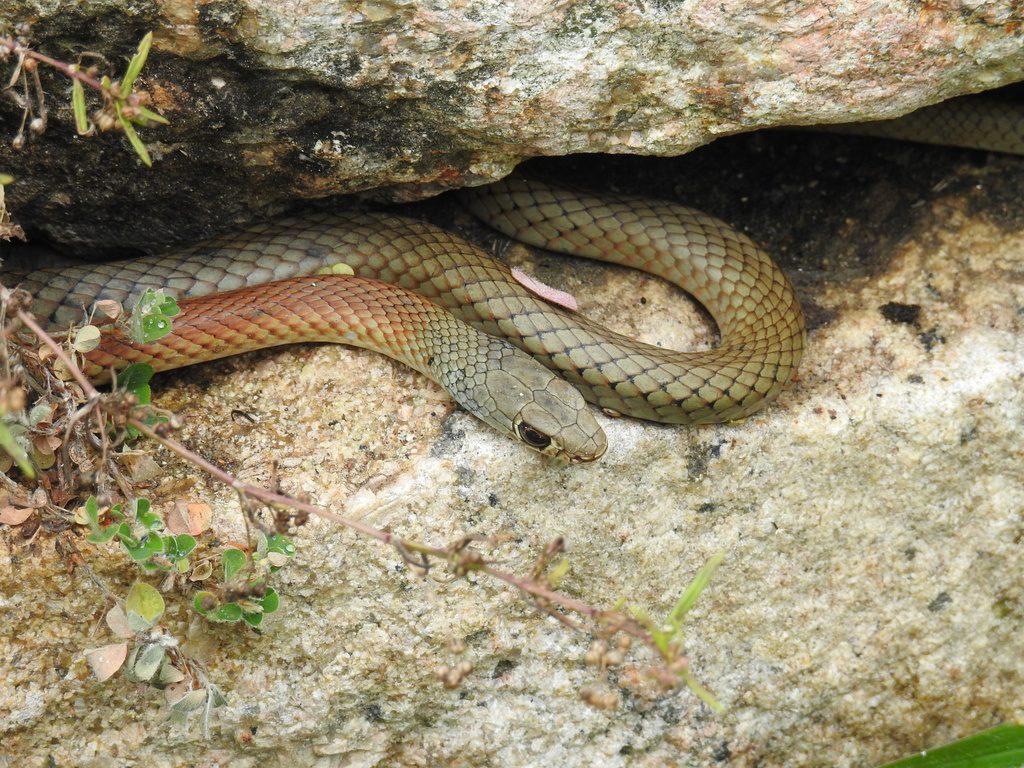
Photo: Edward Bell · CC BY 4.0 · iNaturalist
Yellow-faced Whip Snake
Demansia psammophis
Whip-thin and extremely fast, with a dark comma behind the eye. Harmless in practice — and constantly mistaken for a brown.
- Length
- ~80 cm
- Active
- Diurnal
- Habitat
- Gardens, rockeries, open woodland, grassland
- Diet
- Skinks and small lizards, reptile eggs
- Status
- Protected wildlife — licensed handlers only
Compare before you decide. Never act on an identification made from a photo or a guide, including this one.
Do not wash the bite, do not apply a tourniquet and do not try to catch the snake. Keep the person still, apply a pressure immobilisation bandage if you have one, and get emergency help immediately.
Native reptiles are protected wildlife. Taking, handling, moving or harming one without the appropriate permit is an offence under Queensland's Nature Conservation Act 1992 and carries significant penalties — as well as being the fastest way to get hurt.
The Yellow-faced Whip Snake is a small, extremely fast, slender snake that is very common in South East Queensland — including in suburban gardens, rockeries and lawns.
It is venomous, but it is not considered dangerous to humans. Bites are uncommon and typically cause local pain and swelling rather than serious illness.
Its speed is what gets it noticed, and what gets it misidentified. A slim brownish snake that vanishes across a lawn at high speed is very often this species rather than a young Eastern Brown — but the two are not safely told apart at a glance.
About the Yellow-faced Whip Snake
This is a slender, whip-thin species with a long tail, usually growing to around 80 centimetres.
The body is grey to olive-grey or brown, often with a coppery or rust-coloured flush over the neck and forebody. The head is narrow with noticeably large eyes.
The identifying feature is on the face. A dark, comma-shaped marking curves from the eye down toward the mouth, outlined in pale yellow or cream, and there is usually a pale yellow line along the edge of the snout. Those facial markings are what give the species its name and are the most reliable feature to look for in a photograph.
Habitat
Where can you find a Yellow-faced Whip Snake?
This species does well in open, sunny habitats, including built-up ones. Typical habitats include:
- open woodland and grassland
- rocky outcrops and scree
- suburban gardens, lawns and rockeries
- garden beds, retaining walls and paving
- sheds and around building foundations
They follow their prey, so gardens with a healthy skink population are prime habitat. Rock walls and paving that hold the sun make particularly good basking and shelter sites.
Venom
Is the Yellow-faced Whip Snake dangerous?
It is venomous but is not regarded as dangerous to humans. Bites are rare, and where they occur they generally cause local pain, swelling and sometimes nausea or headache rather than serious envenomation.
That said, every snake bite in Australia should be assessed by a medical professional. Part of the reason is this species itself: it is easily confused with more dangerous snakes, and a bite identified as a whip snake by the person bitten is not a confirmed identification.
If you are bitten, apply a pressure immobilisation bandage, stay still, and get medical help.
Diet
What does the Yellow-faced Whip Snake eat?
Skinks make up the overwhelming majority of the diet. They also take:
- small lizards of other kinds
- reptile eggs
- frogs, occasionally
They hunt by sight during the day, chasing prey down at speed rather than ambushing it — which is why they are built the way they are.
Behaviour
What should you know about this species?
Yellow-faced Whip Snakes are diurnal and rely on eyesight and speed. They are among the fastest snakes you will see in a South East Queensland backyard.
They are nervous and flighty. The usual response to a person is to disappear at pace into cover, and they very rarely stand their ground.
They are also useful. A whip snake in the garden is generally a sign of a healthy skink population, and it is doing no harm to anyone.
What to do if you see a Yellow-faced Whip Snake
In most cases, nothing. Give it room and it will be gone on its own, usually within seconds.
Because this species is so easily mistaken for a juvenile Eastern Brown, do not rely on your own identification to decide it is safe. If there is any doubt at all — and especially before letting children or pets back into the area — send us a photo taken from a safe distance.
If it has got into a building or somewhere it cannot get out of, call a licensed snake catcher for relocation.
Contributed photographs, reused under Creative Commons licences. Colour and pattern vary a lot between individuals — compare several before settling on an ID.
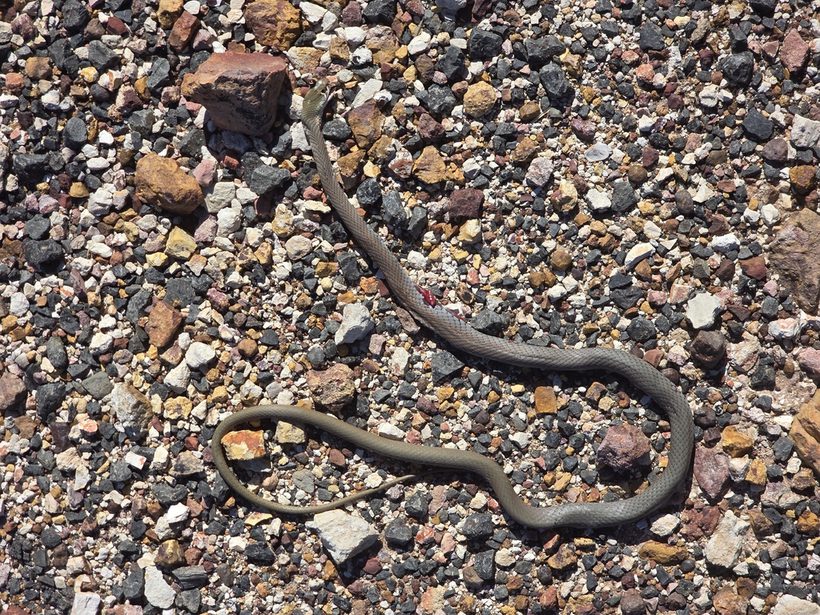
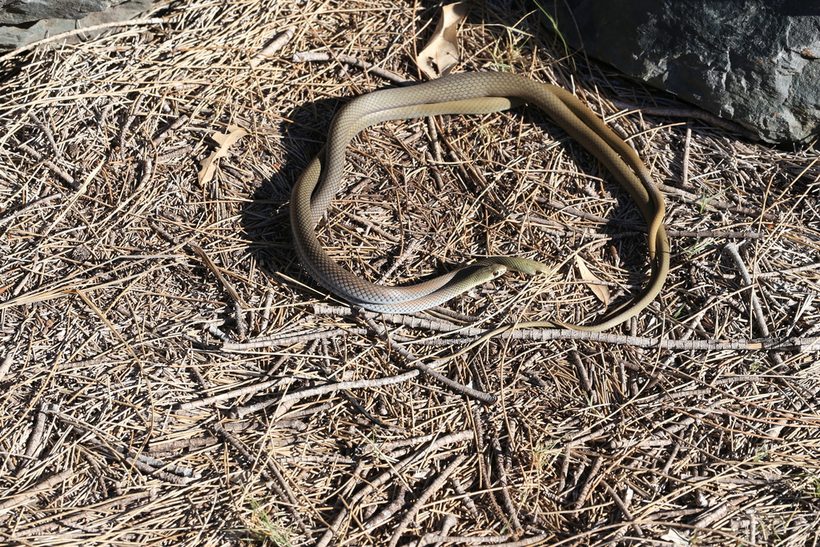
Photo: no rights reserved · CC0 · iNaturalist
Photo: Martin Rady · CC BY 4.0 · iNaturalist
Asked on
most call-outs.
How do you identify a Yellow-faced Whip Snake?
Is the Yellow-faced Whip Snake venomous?
Could I be confusing one with an Eastern Brown Snake?
How big do Yellow-faced Whip Snakes get?
Why do I have one in my garden?
Do I need to have it removed?
Call or text — a licensed handler will talk you through it. If someone has been bitten, call 000 first.