
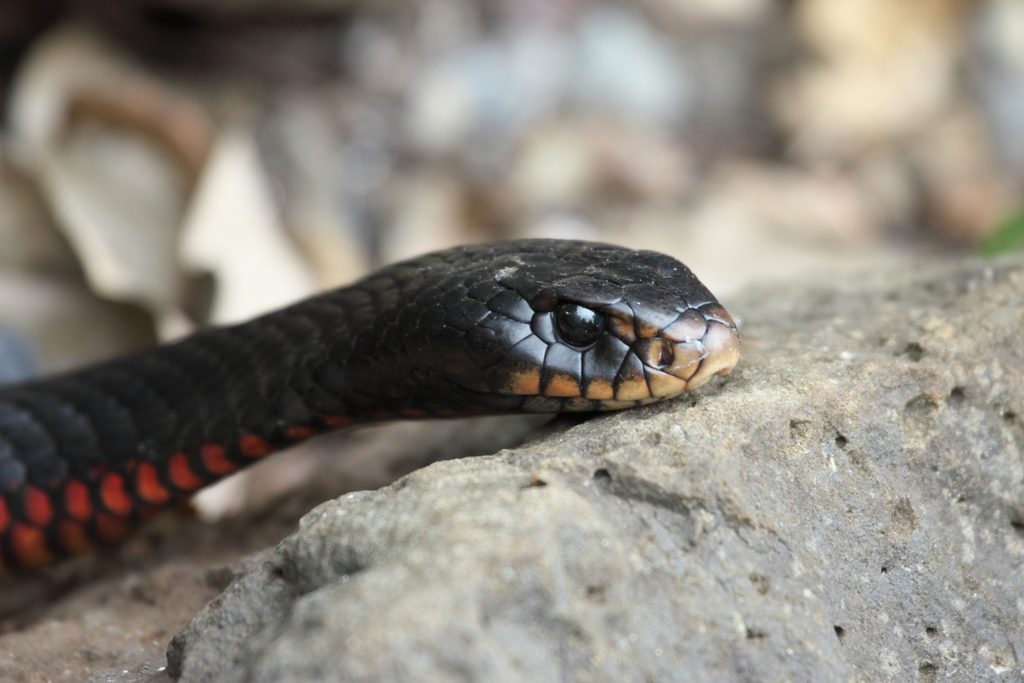
Photo: no rights reserved · CC0 · iNaturalist
Red-bellied Black Snake
Pseudechis porphyriacus
Glossy black with crimson flanks, tied to water, and one of the few snakes you can name on colour alone. Shy with it.
- Length
- 1.2–1.5 m, to ~2 m
- Active
- Diurnal
- Habitat
- Creeks, dams, swamps, woodland near water
- Diet
- Frogs, tadpoles, fish, lizards, other snakes
- Status
- Protected wildlife — licensed handlers only
Compare before you decide. Never act on an identification made from a photo or a guide, including this one.
Do not wash the bite, do not apply a tourniquet and do not try to catch the snake. Keep the person still, apply a pressure immobilisation bandage if you have one, and get emergency help immediately.
Native reptiles are protected wildlife. Taking, handling, moving or harming one without the appropriate permit is an offence under Queensland's Nature Conservation Act 1992 and carries significant penalties — as well as being the fastest way to get hurt.
The Red-bellied Black Snake is one of the most recognisable snakes in eastern Australia and one of the few that can be identified confidently on colour alone. Glossy black above with bright red or crimson flanks, it is a common sight around creeks, dams and wetlands in South East Queensland.
This species is venomous and any bite requires medical attention, but it is far less dangerous to humans than the Eastern Brown Snake, and it is notably reluctant to bite.
They are shy, generally retiring animals that would rather leave than confront a person.
About the Red-bellied Black Snake
Adults are typically between 1.2 and 1.5 metres in length, with some individuals reaching around 2 metres. The build is moderately heavy and the body has a distinctly glossy finish.
The upper surface is a uniform deep, shining black. The lower flanks are bright red, crimson or pink, fading to a paler cream or pink along the centre of the belly. The snout is often a slightly paler brown.
The red colouring is usually visible along the sides of a moving snake, but it can be surprisingly hard to see on an animal at rest or in poor light — so a plain black snake near water in South East Queensland should still be treated as this species until a licensed handler says otherwise.
Habitat
Where can you find a Red-bellied Black Snake?
This species is strongly tied to water and to the frogs that live near it. Typical habitats include:
- creek banks and river margins
- dams, ponds and farm water points
- swamps, wetlands and drainage lines
- woodland and forest close to water
- suburban yards backing onto creeks or bushland
They are strong swimmers and are quite comfortable entering water to hunt or escape. Around homes, they are most often found where a property adjoins a creek, or around garden ponds and pool surrounds where frogs gather.
Venom
Is the Red-bellied Black Snake dangerous?
It is venomous and a bite always requires urgent medical attention, but serious outcomes are uncommon and deaths are very rare. Bites typically cause local pain and swelling, nausea, headache and general illness.
This species is also strongly disinclined to bite. A disturbed snake will usually freeze, then attempt to escape. If cornered it may flatten its neck, raise its forebody and hiss, and it may make a closed-mouth mock strike before it commits to a real one.
None of that makes a bite acceptable. Apply a pressure immobilisation bandage, keep the person still, and call 000.
Diet
What does the Red-bellied Black Snake eat?
Frogs make up the largest part of the diet, which is why this species stays so close to water. They also take:
- tadpoles and small fish
- lizards and skinks
- small mammals
- other snakes, including their own species
Cane toads are a serious problem for this species. A Red-bellied Black Snake that eats a cane toad is usually killed by its toxins, and the spread of cane toads has driven noticeable declines in local populations.
Behaviour
What should you know about this species?
Red-bellied Black Snakes are active during the day, particularly in the morning and late afternoon, and are often seen basking near water or moving along a creek bank.
They are among the more placid Australian elapids. Their standard response to a person is to move away, and many encounters end with the snake simply disappearing into the water or undergrowth.
They are also worth having around. As a predator of frogs and small vertebrates — and as a species that competes with Eastern Browns — a resident Red-bellied Black Snake is not a bad neighbour.
What to do if you see a Red-bellied Black Snake
Keep your distance and let it move on. In most cases that is the entire job, and the snake will be gone within minutes.
Keep dogs well away. Dogs account for a large share of the serious incidents with this species, because they will chase and mouth a snake that would otherwise have left.
If the snake has entered a building, a pool enclosure or somewhere it cannot easily leave, call a licensed snake catcher for relocation rather than attempting it yourself.
Contributed photographs, reused under Creative Commons licences. Colour and pattern vary a lot between individuals — compare several before settling on an ID.
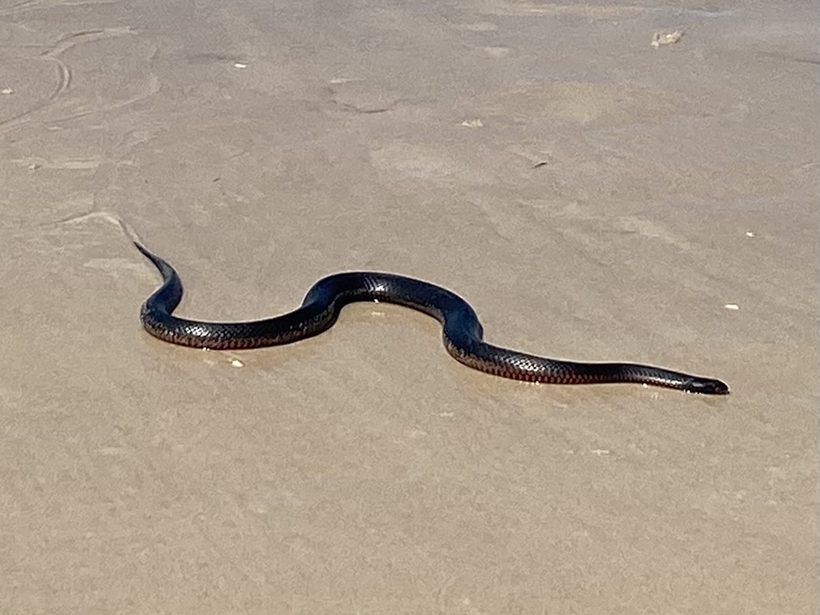
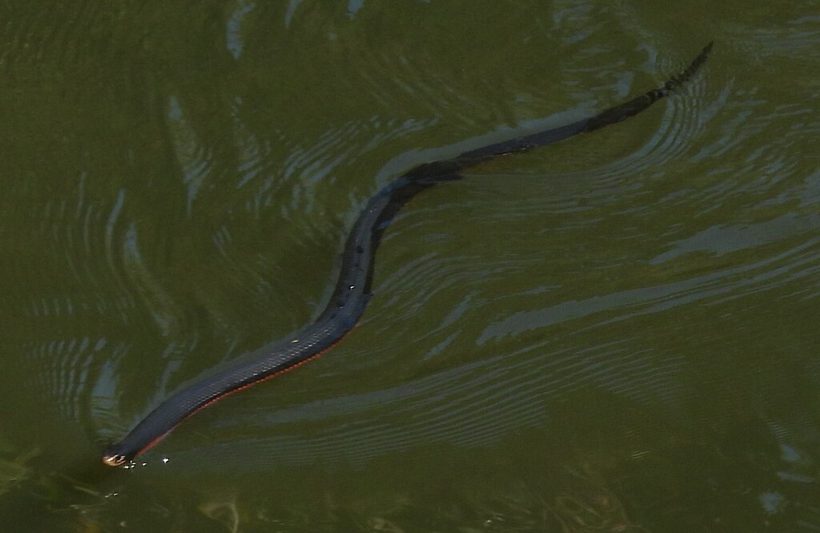
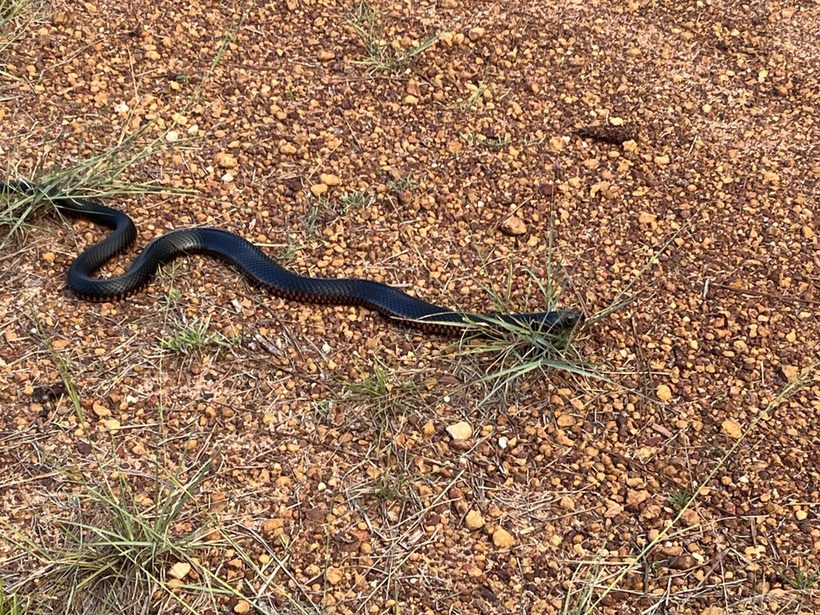
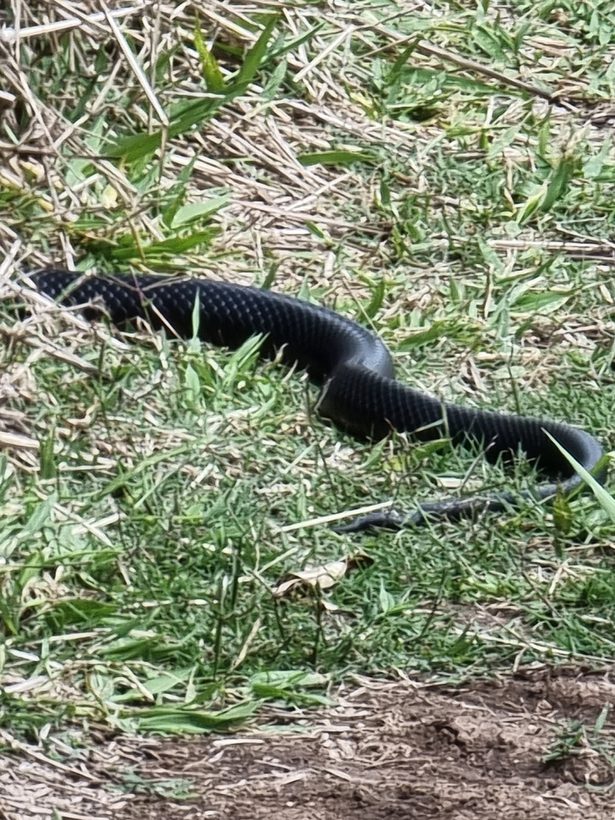
Photo: no rights reserved · CC0 · iNaturalist
Photo: Mark Clarke · CC BY 4.0 · iNaturalist
Photo: no rights reserved · CC0 · iNaturalist
Photo: Martin Rady · CC BY 4.0 · iNaturalist
Asked on
most call-outs.
How do you identify a Red-bellied Black Snake?
Are Red-bellied Black Snakes dangerous?
What should I do if my dog is bitten?
Why is one living near my dam or creek?
Do cane toads kill Red-bellied Black Snakes?
Should I have it removed?
Call or text — a licensed handler will talk you through it. If someone has been bitten, call 000 first.