
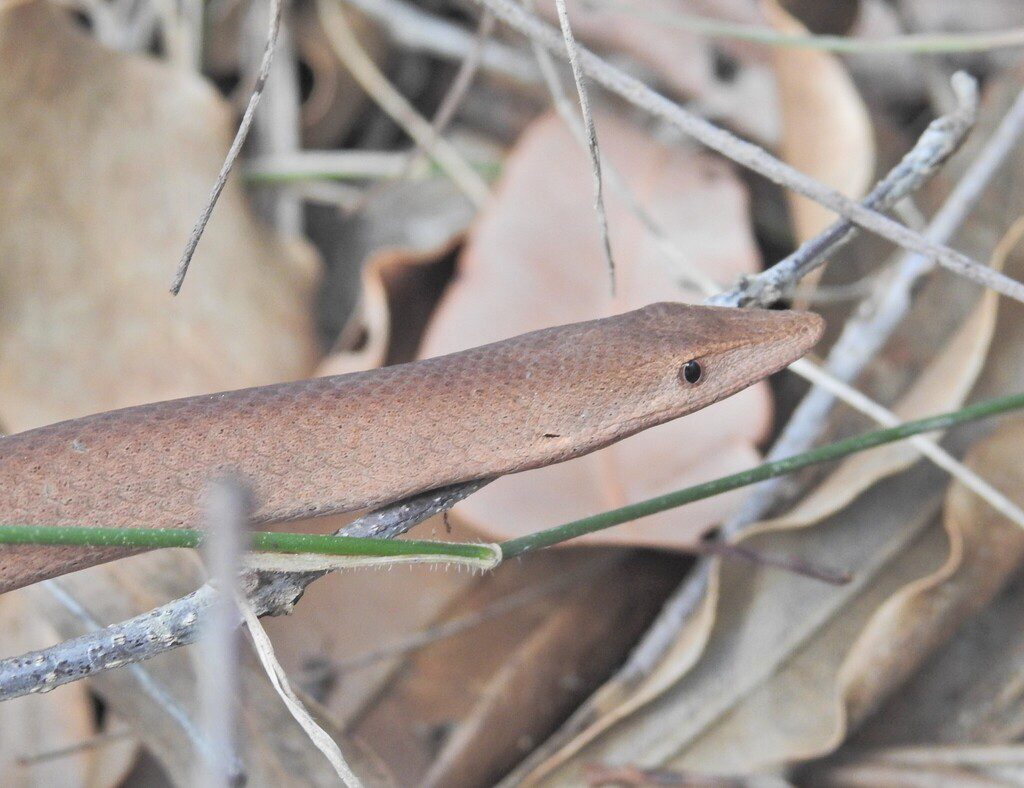
Photo: Scott W. Gavins · CC BY 4.0 · iNaturalist
Burton's Legless Lizard
Lialis burtonis
A lizard, not a snake — and a large share of our call-outs. Wedge-shaped snout, ear openings, very long tail.
- Length
- to ~60 cm
- Active
- Day and night
- Habitat
- Garden beds, mulch, grassland, under timber
- Diet
- Skinks and geckos
- Status
- Protected wildlife — licensed handlers only
Compare before you decide. Never act on an identification made from a photo or a guide, including this one.
Legless lizards are protected in Queensland exactly as snakes are. Taking, handling, moving, keeping or harming one without the appropriate permit is an offence under the Nature Conservation Act 1992, and penalties are substantial.
That applies whether or not you believed it was something else at the time. Killing a native reptile because you were unsure what it was is not a defence — and it is how a great many people are hurt by the ones that can hurt them.
If you cannot identify it, photograph it from a safe distance and send it to us. There is no penalty for asking.
Burton's Legless Lizard is not a snake. It is a lizard that has lost its legs, and it is responsible for a substantial share of the snake call-outs we attend.
It is completely harmless — no venom, no risk to people or pets — and it is very common in gardens and bushland throughout South East Queensland.
Learning to recognise one saves everybody a trip. It also keeps people out of trouble: killing a native reptile because you mistook it for a snake is still an offence, and mistaken identity is not a defence.
About Burton's Legless Lizard
This species grows to around 60 centimetres, with a long slender body and a tail that makes up more than half its total length.
Colour is extremely variable — grey, fawn, brown, reddish or almost black, either plain or with fine longitudinal stripes, and often with dark markings on the sides of the head. Two lizards from the same garden can look entirely different.
The head is the most distinctive feature: long, narrow and sharply wedge-shaped, coming to a point like the tip of a spear. No snake in the region has that profile.
Description
How to tell it apart from a snake
There are three features that settle it, and none of them require getting close:
- Ear openings. Look for a small hole behind and below the eye. Lizards have them; snakes do not.
- The tongue. A legless lizard has a broad, flat, fleshy tongue. A snake's is thin and deeply forked.
- Hind-limb flaps. Small scaly flaps sit either side of the vent, the last remnants of back legs.
- Tail length. More than half the total length is tail — much longer, proportionally, than any local snake.
- The snout. Sharply pointed and wedge-shaped, quite unlike any snake head.
If you can photograph the head from a safe distance, we can almost always tell you which it is straight away.
Habitat
Where can you find Burton's Legless Lizard?
This is one of the most widely distributed reptiles in Australia and is thoroughly at home in gardens:
- garden beds, mulch and leaf litter
- grassland and open woodland
- under rocks, timber and pavers
- spinifex and tussock grass
- compost and stacked garden waste
They are common in exactly the same suburban spots as the small crowned snakes, which is part of why they get reported so often.
Venom
Is Burton's Legless Lizard dangerous?
No. It has no venom and poses no threat whatsoever to people, children or pets.
If handled it may struggle and can give a weak nip, and it may shed its tail — a defence that costs the animal a great deal of stored energy to regrow. Neither is a danger to you, but both are good reasons to leave it alone.
It is protected native wildlife, the same as every snake in this guide. Taking, handling, moving or harming one without the appropriate permit is an offence under Queensland's Nature Conservation Act 1992, and the penalties are substantial.
Diet
What does Burton's Legless Lizard eat?
Almost entirely other reptiles:
- small skinks
- geckos
- occasionally other small lizards
It has a remarkable feeding method: hinged, backward-curving teeth and flexible jaws that let it grip a struggling skink and hold on, constricting the prey's chest with its jaws until it suffocates. It is a lizard that hunts lizards the way a snake would.
Behaviour
What should you know about this species?
Burton's Legless Lizards are active in both the day and the night, and are ambush hunters — they will lie still in litter or grass for long periods waiting for a skink to pass.
When disturbed they often freeze rather than flee, which does nothing to dispel the impression that a dangerous snake is holding its ground. They may also raise the front of the body, which looks alarming and is entirely bluff.
They are genuinely useful garden residents. Large numbers are still destroyed every year by people who mistake them for something dangerous — which is both an unnecessary loss and an offence.
What to do if you see Burton's Legless Lizard
Leave it alone. It is harmless, it belongs there, and it will move on when it is ready.
If you are not certain what you are looking at — and that is a completely reasonable position — photograph it from a safe distance and send it to us. We would far rather identify a lizard from a photo than have someone kill one, or handle a snake that turned out not to be a lizard.
Never kill a reptile to be on the safe side. It is unlawful without a permit, it carries real penalties, it is unnecessary, and it is how a great many people are bitten by the reptiles that actually can bite.
Contributed photographs, reused under Creative Commons licences. Colour and pattern vary a lot between individuals — compare several before settling on an ID.
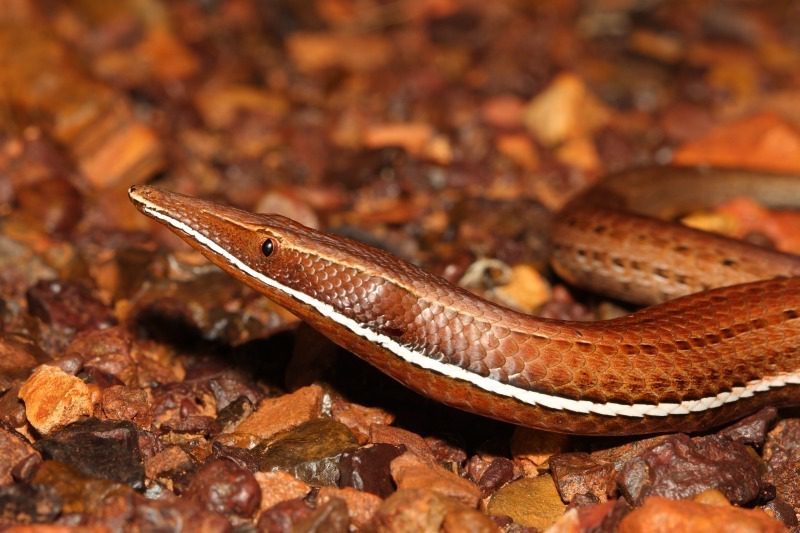
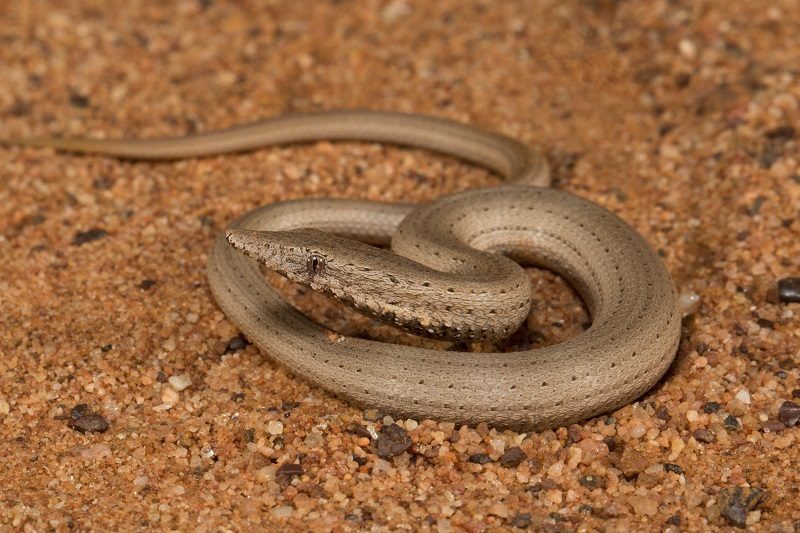
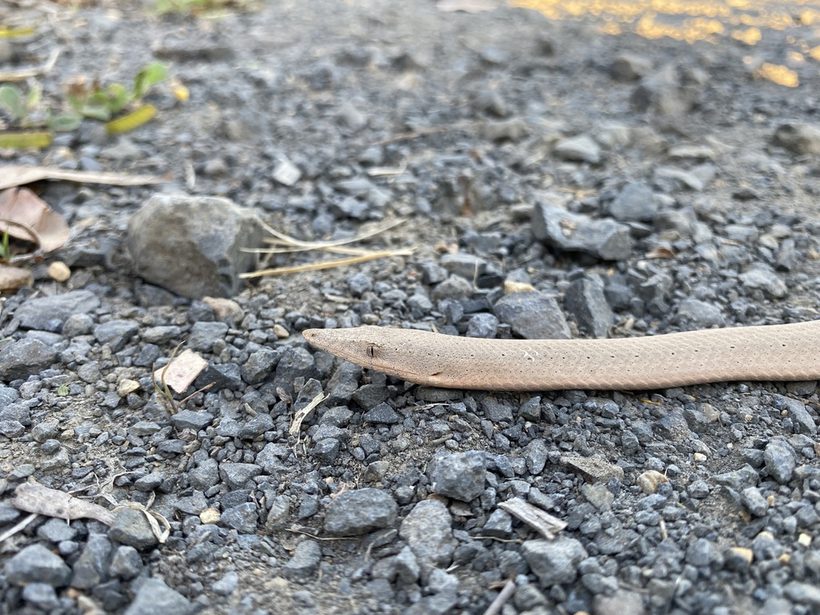
Photo: dhfischer · CC BY 4.0 · iNaturalist
Photo: dhfischer · CC BY 4.0 · iNaturalist
Photo: Edward Bell · CC BY 4.0 · iNaturalist
Asked on
most call-outs.
Is this a snake or a lizard?
Is Burton's Legless Lizard venomous?
Why does it look so much like a snake?
Could I be confusing it with a juvenile brown snake?
Will it hurt my dog or cat?
Should I remove it from my garden?
Call or text — a licensed handler will talk you through it. If someone has been bitten, call 000 first.