
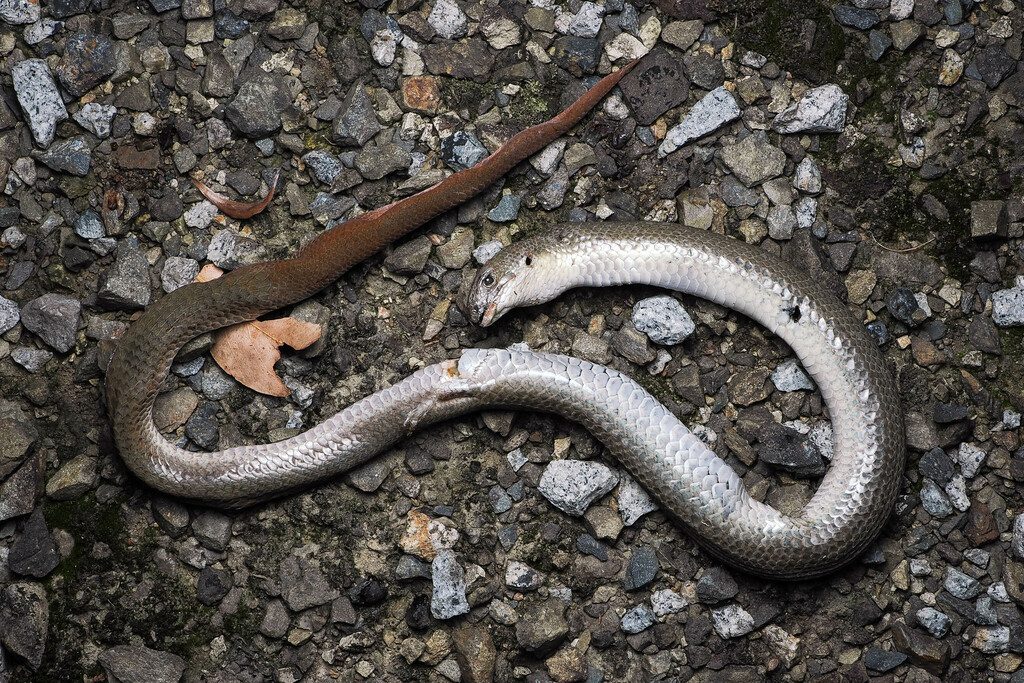
Photo: Ged Tranter · CC BY 4.0 · iNaturalist
Common Scaly-foot
Pygopus lepidopodus
The more convincing of the two legless lizards — it mimics a venomous snake on purpose.
- Length
- to ~75 cm
- Active
- Day and dusk
- Habitat
- Heath, wallum, dry woodland, sandy soils
- Diet
- Spiders and insects
- Status
- Protected wildlife — licensed handlers only
Compare before you decide. Never act on an identification made from a photo or a guide, including this one.
Legless lizards are protected in Queensland exactly as snakes are. Taking, handling, moving, keeping or harming one without the appropriate permit is an offence under the Nature Conservation Act 1992, and penalties are substantial.
That applies whether or not you believed it was something else at the time. Killing a native reptile because you were unsure what it was is not a defence — and it is how a great many people are hurt by the ones that can hurt them.
If you cannot identify it, photograph it from a safe distance and send it to us. There is no penalty for asking.
The Common Scaly-foot is the second of the legless lizards in this guide, and like Burton's Legless Lizard it is regularly reported as a snake.
It is entirely harmless. It has no venom, no capacity to hurt anyone, and no interest in doing so.
It is also the more convincing snake mimic of the two, because it is larger, more uniformly coloured, and lacks the sharply pointed snout that gives Burton's away at a glance.
About the Common Scaly-foot
This species reaches around 75 centimetres, making it one of the larger legless lizards, with a very long tail accounting for well over half its length.
Colour is usually grey to grey-brown or olive, often with rows of darker spots or fine dark stripes running the length of the body. The belly is cream to pale grey.
The head is more rounded than Burton's Legless Lizard's, which is precisely why this one fools more people — it looks far more like a snake's head at a glance.
Description
How to tell it apart from a snake
The same three features settle it, and they are worth knowing for any suspected legless lizard:
- Ear openings. A visible hole behind and below the eye. Snakes have none.
- The tongue. Broad, flat and fleshy, not thin and forked.
- Hind-limb flaps. Obvious scaly flaps either side of the vent — more prominent on this species than on Burton's.
- Tail length. Well over half the animal, far longer proportionally than a snake's.
The hind-limb flaps are the clearest single feature on this species. Once you have seen them you will not mistake one again.
Habitat
Where can you find a Common Scaly-foot?
This species prefers drier, more open country than Burton's but overlaps widely with it:
- heathland and coastal wallum
- dry open woodland and forest
- grassland and tussock
- sandy soils and dune systems
- gardens adjoining bushland
They shelter under litter, grass clumps, logs and rocks, and are often seen moving in the open on warm days.
Venom
Is the Common Scaly-foot dangerous?
No. It is non-venomous and completely harmless to people, children and pets.
When threatened it may raise the front of its body and, remarkably, mimic the defensive posture of a venomous snake — a bluff that works well enough on predators and works far too well on people.
It can also shed its tail if grabbed, which costs it a great deal and is a good reason not to handle one. Beyond that, handling it is not lawful: it is protected native wildlife under Queensland's Nature Conservation Act 1992, and interfering with one without a permit carries substantial penalties.
Diet
What does the Common Scaly-foot eat?
Unlike Burton's Legless Lizard, this species is an invertebrate specialist:
- spiders
- insects and their larvae
- other small invertebrates
It forages through litter and low vegetation, mostly by day and around dusk.
Behaviour
What should you know about this species?
Common Scaly-foots are mainly active during the day and at dusk, and are often seen moving through grass or across open ground in warm weather.
The snake mimicry is genuine and deliberate: raising the forebody, sometimes flattening the neck and making mock strikes. As a defence against birds of prey it is effective. As a way of reassuring a homeowner it is a disaster.
They are harmless residents that do useful work on spiders and insects. Like Burton's, significant numbers are destroyed through mistaken identity every year — unlawfully, and unnecessarily.
What to do if you see a Common Scaly-foot
Leave it be. It poses no risk at all and will move off in its own time.
If you are not sure — and this species is a more convincing snake mimic than Burton's — take a photo from a safe distance and send it to us. Looking for the ear opening and hind-limb flaps in the photo is usually enough to settle it.
Do not kill a reptile because you are unsure what it is. Without a permit it is an offence carrying substantial penalties, and it is how people get bitten by the ones that can hurt them. Being unsure is a reason to call us, not a reason to act.
Contributed photographs, reused under Creative Commons licences. Colour and pattern vary a lot between individuals — compare several before settling on an ID.
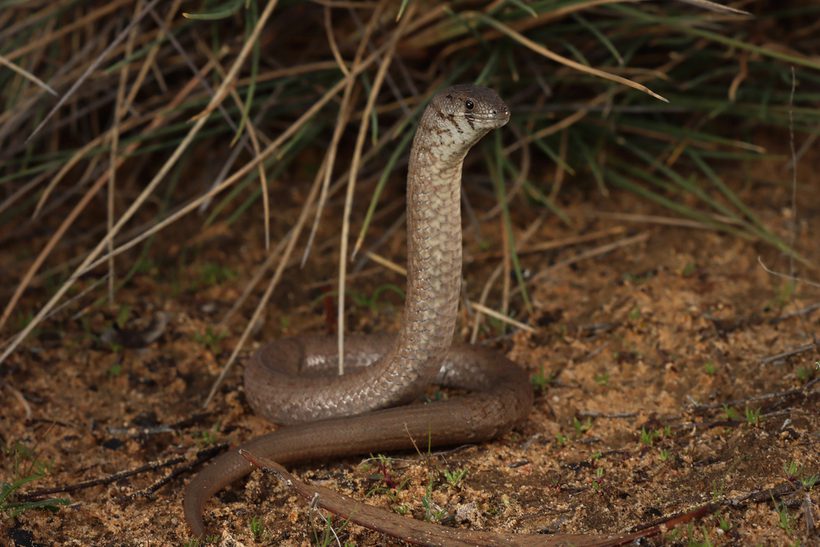
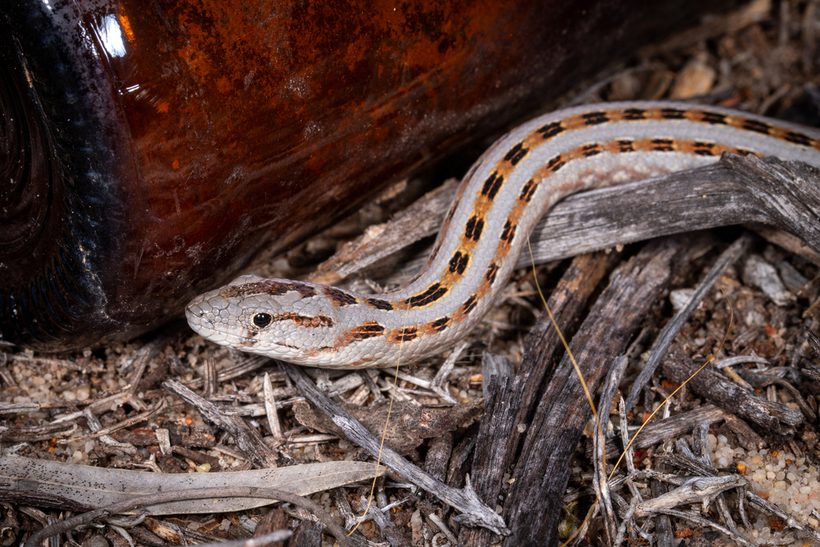
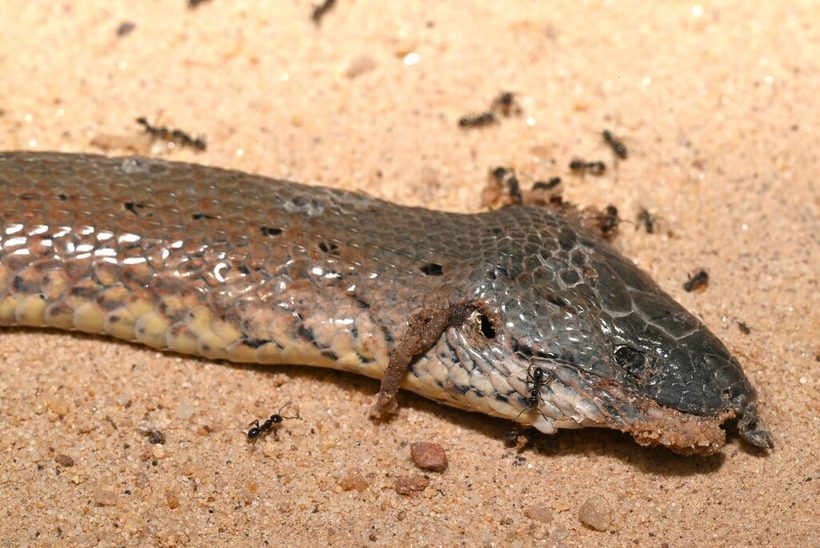
Photo: Connor Margetts · CC BY 4.0 · iNaturalist
Photo: Cal Wood · CC BY 4.0 · iNaturalist
Photo: no rights reserved · CC0 · iNaturalist
Asked on
most call-outs.
Is the Common Scaly-foot a snake?
How is it different from Burton's Legless Lizard?
Is it venomous?
Why did it rear up at me like a snake?
Where would I find one?
Should I have it removed?
Call or text — a licensed handler will talk you through it. If someone has been bitten, call 000 first.