
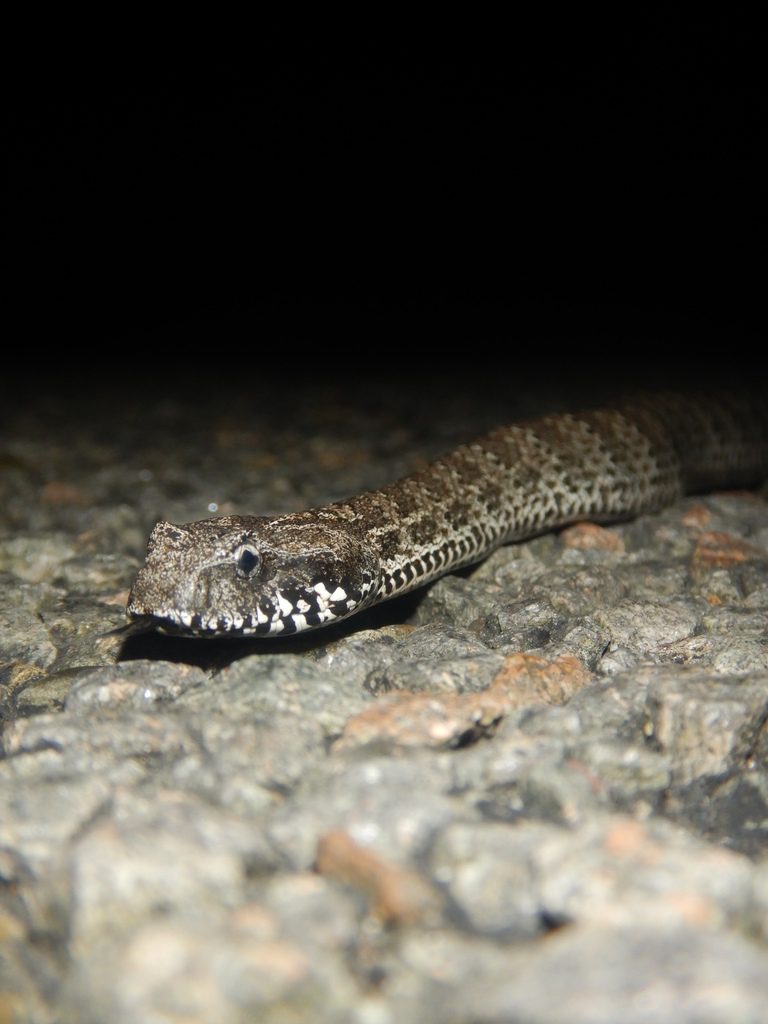
Photo: Bryce Watts-Parker · CC BY 4.0 · iNaturalist
Common Death Adder
Acanthophis antarcticus
The one snake here that will not move away. Stout, camouflaged, and bitten into by people who never saw it.
- Length
- 40–70 cm, to ~1 m
- Active
- Night and dusk
- Habitat
- Heath, wallum, deep leaf litter
- Diet
- Lizards, small mammals, birds
- Status
- Protected wildlife — licensed handlers only
Do not wash the bite, do not apply a tourniquet and do not try to catch the snake. Keep the person still, apply a pressure immobilisation bandage if you have one, and get emergency help immediately.
Native reptiles are protected wildlife. Taking, handling, moving or harming one without the appropriate permit is an offence under Queensland's Nature Conservation Act 1992 and carries significant penalties — as well as being the fastest way to get hurt.
The Common Death Adder is the exception to nearly everything else in this guide. Almost every other snake in South East Queensland will move away when it becomes aware of you. This one will not.
It is an ambush predator that relies entirely on camouflage. It sits motionless in leaf litter, sometimes for weeks in the same spot, and its defence against a large animal approaching is to stay perfectly still. That is exactly why people get bitten — they step on it.
It is dangerously venomous. It is also now uncommon in much of South East Queensland, having declined significantly through habitat loss and cane toads.
About the Common Death Adder
Death Adders look nothing like the other elapids in this guide. They are short and very stout, typically 40 to 70 centimetres with some individuals approaching a metre, with a broad, triangular head clearly distinct from the neck — a build much closer to a viper than to a brown snake.
Colour ranges through grey, brown, reddish and almost black, banded with darker cross-bands. The pattern is superb camouflage against leaf litter and is designed to be difficult to see, which it is.
The tail is the tell. It narrows abruptly to a thin, soft, often paler tip that the snake wriggles like a grub to lure lizards and birds within striking range.
Habitat
Where can you find a Common Death Adder?
This species needs deep ground cover to ambush from. Typical habitats include:
- heathland and coastal wallum
- open forest and woodland with deep leaf litter
- grassy understorey and dense ground cover
- sandy soils and dune systems
- bushland edges adjoining rural properties
They are not a suburban backyard snake in the way an Eastern Brown is. Encounters are far more likely on bush tracks, in wallum heath and on rural blocks than in a mown yard.
Venom
Is the Common Death Adder dangerous?
Yes. The Death Adder is dangerously venomous, with a highly neurotoxic venom that affects the nerves controlling muscles and, in serious cases, breathing.
It also has the longest fangs and one of the fastest strikes of any Australian snake — the strike and recovery is measured in fractions of a second.
Any bite is a medical emergency. Apply a pressure immobilisation bandage, keep the person completely still, and call 000. Antivenom is available and effective, so the priority is getting the person to it quickly and calmly.
Diet
What does the Common Death Adder eat?
This is a sit-and-wait predator that lets its food come to it. Prey includes:
- skinks and other lizards
- small mammals
- birds
- frogs
The wriggling tail tip is used as a lure, twitching just in front of the concealed head until a lizard or bird comes close enough to strike.
Behaviour
What should you know about this species?
The single most important thing about this species is that it does not flee. Where an Eastern Brown will be gone before you have finished noticing it, a Death Adder will sit still and rely on not being seen.
They are mainly active at night and around dusk, but an ambushing snake may be in position at any hour, buried under a shallow layer of leaf litter with only the head and tail exposed.
They have declined badly in parts of South East Queensland. Cane toads are lethal to them, and their habit of staying put makes them very vulnerable to habitat clearing. Encountering one is now genuinely uncommon.
What to do if you see a Common Death Adder
Stop moving, then back away along the path you came in on. Do not step around it or over it, and do not assume it will move — it will not.
Mark the spot if you safely can, keep everyone well clear, and call a licensed snake catcher. Because they stay put, a Death Adder reported near a house is usually still there when we arrive.
On bush tracks and in heath, watch where you put your feet and hands, wear proper footwear, and use a torch after dark. Looking before you step is the entire strategy with this species.
Contributed photographs, reused under Creative Commons licences. Colour and pattern vary a lot between individuals — compare several before settling on an ID.
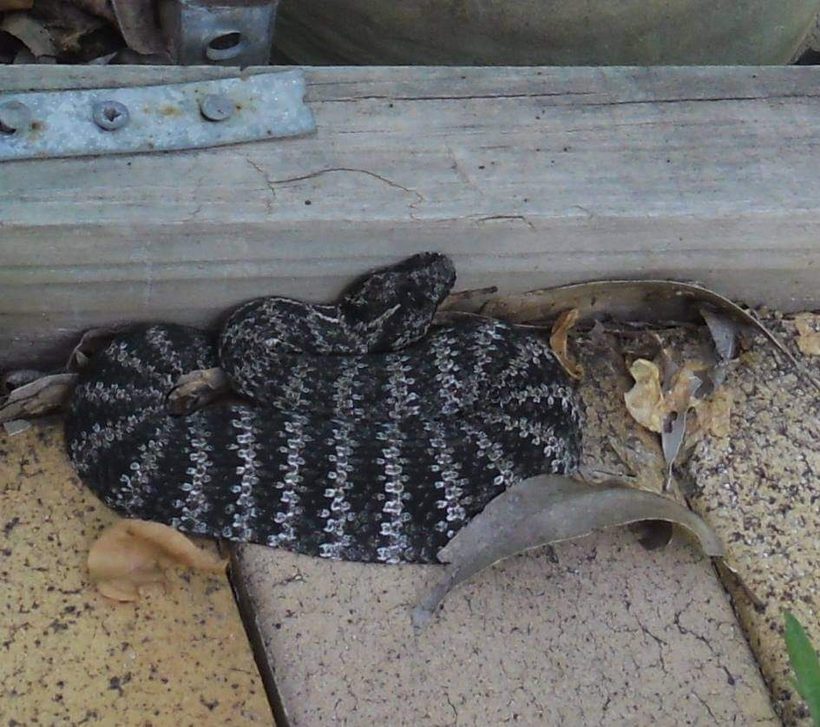
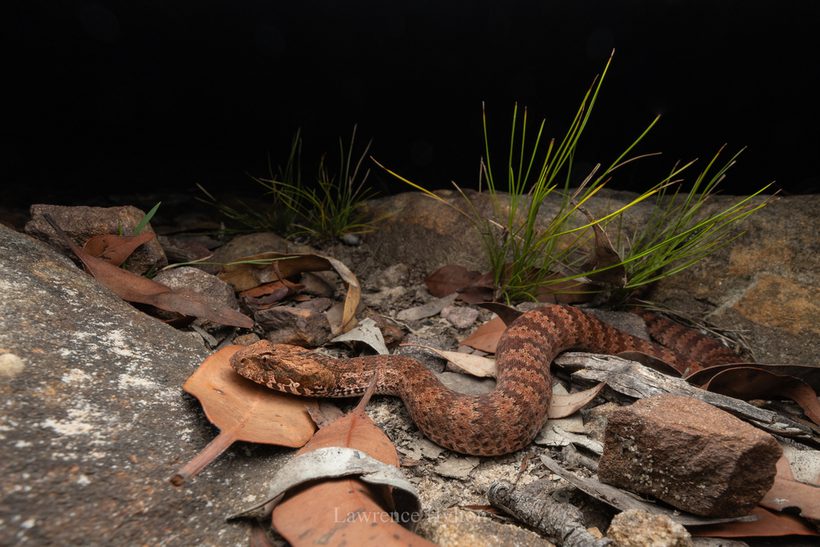
Photo: no rights reserved · CC0 · iNaturalist
Photo: Lawrence Hylton · CC BY 4.0 · iNaturalist
Asked on
most call-outs.
How do you identify a Common Death Adder?
Why is it more dangerous than other snakes if it is not aggressive?
Is it actually a viper?
What is the tail for?
Are they common on the Sunshine Coast?
What should I do if someone is bitten?
Call or text — a licensed handler will talk you through it. If someone has been bitten, call 000 first.