
Photo: George Baker · CC BY 4.0 · iNaturalist
Lace Monitor
Varanus varius
Two metres of goanna. Not venomous — but it climbs, and if you are the nearest vertical object it climbs you.
- Length
- to ~2 m
- Active
- Diurnal
- Habitat
- Forest, acreage, sheds, picnic areas
- Diet
- Carrion, eggs, insects, small animals
- Status
- Protected wildlife — licensed handlers only
Legless lizards are protected in Queensland exactly as snakes are. Taking, handling, moving, keeping or harming one without the appropriate permit is an offence under the Nature Conservation Act 1992, and penalties are substantial.
That applies whether or not you believed it was something else at the time. Killing a native reptile because you were unsure what it was is not a defence — and it is how a great many people are hurt by the ones that can hurt them.
If you cannot identify it, photograph it from a safe distance and send it to us. There is no penalty for asking.
The Lace Monitor is the largest lizard most people in South East Queensland will ever see, and one of the most frequent non-snake call-outs we attend. Adults reach two metres, most of that tail, and they climb extremely well.
They are not venomous in any sense that matters medically, but a large goanna can inflict serious lacerations with its claws and teeth, and those wounds carry a real risk of infection. It is an animal to respect and leave alone rather than fear.
Almost every call we get about one comes down to the same handful of situations: a chicken coop, a dog, a bin, or a goanna that has walked into a shed and cannot work out how to leave.
About the Lace Monitor
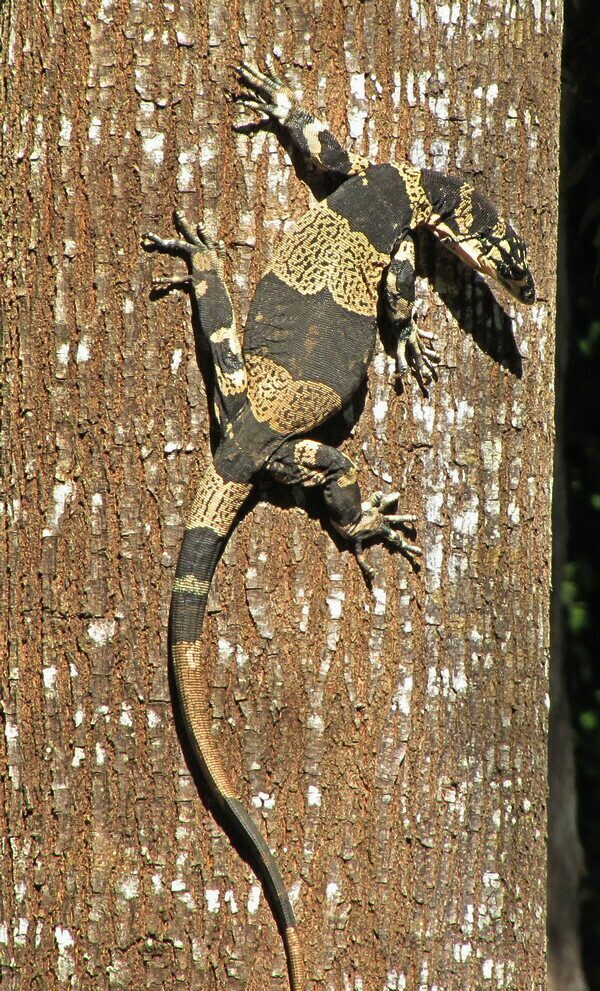
Lace Monitors are large, powerfully built lizards with long necks, strong limbs and heavy claws. Adults are commonly 1.5 to 2 metres in total length, with the tail accounting for well over half.
The usual form is dark blue-grey to almost black, scattered with pale cream or yellow spots, flecks and broken bands, and the snout is banded in dark and pale. A second form, known as Bell's phase, is boldly banded in broad black and yellow and looks like a different animal entirely.
The tongue is long, forked and blue-grey, and is flicked constantly. That snake-like tongue often startles people who have not seen a monitor up close — it is how the animal smells its surroundings, and it is completely normal.
Habitat
Where can you find a Lace Monitor?
This species needs trees and does well anywhere there is food to scavenge:
- open forest, woodland and rainforest margins
- rural properties and acreage
- picnic areas, campgrounds and parks
- sheds, carports and chicken runs
- large trees with hollows and rough bark
They are strongly associated with people in one unfortunate way: they learn very quickly where food is. Picnic areas, compost heaps, bins and pet bowls all turn a wild goanna into a regular visitor, which rarely ends well for the goanna.
Venom
Is the Lace Monitor dangerous?
Not in the way a venomous snake is. Monitors are not medically significant envenomers and there is no antivenom because none is needed.
They can still hurt you. A two-metre lizard defending itself has long claws, a strong bite and a heavy tail it will lash. Wounds are typically deep scratches and lacerations, and the significant risk afterwards is infection — any bite or scratch from a goanna should be cleaned properly and seen by a doctor.
The most common way people get hurt is by cornering one. A frightened Lace Monitor runs for the nearest vertical object and climbs it. If you are standing between it and a tree, the nearest vertical object is you. That is not an attack — it is a lizard doing the only thing it knows how to do.
Diet
What does the Lace Monitor eat?
Lace Monitors are opportunists and will eat almost anything they can catch or find:
- carrion and roadkill
- eggs, including poultry eggs
- nestling birds
- insects and other invertebrates
- small mammals and reptiles
- scraps, pet food and rubbish
The chicken coop problem comes down to eggs. A goanna that has found a reliable supply will come back, and mesh that keeps foxes out will not necessarily keep a determined monitor out.
Behaviour
What should you know about this species?
Lace Monitors are active by day and are excellent climbers, spending much of their time in trees. In cooler months they become inactive and may not be seen for weeks at a time.
A disturbed goanna will usually run — often noisily — and climb. If it cannot escape it may stand high on its legs, inflate its throat, hiss loudly and lash its tail. That display is bluff and is meant to make you go away.
They are also remarkable animals to have around: they clean up carrion, control insects, and are a sign of habitat healthy enough to support a large predator.
What to do if you see a Lace Monitor
Nothing, usually. Give it room, keep dogs inside, and let it move through. Never corner one, and never stand between a goanna and the nearest tree.
If one is in a shed or a garage, open the doors, clear the area and leave it alone for an hour — most let themselves out. If it is in a chicken run, secure the birds and deal with the access point afterwards rather than confronting the lizard.
Call us if it is injured, has been caught by a dog, has been hit by a car, or is trapped somewhere it genuinely cannot leave. Lace Monitors are protected wildlife, and moving one without a permit is an offence.
Contributed photographs, reused under Creative Commons licences. Colour and pattern vary a lot between individuals — compare several before settling on an ID.
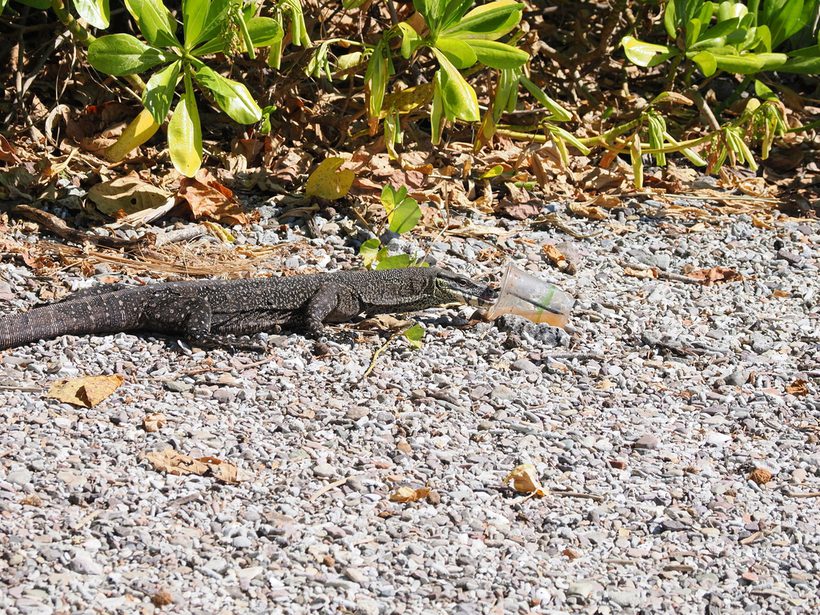
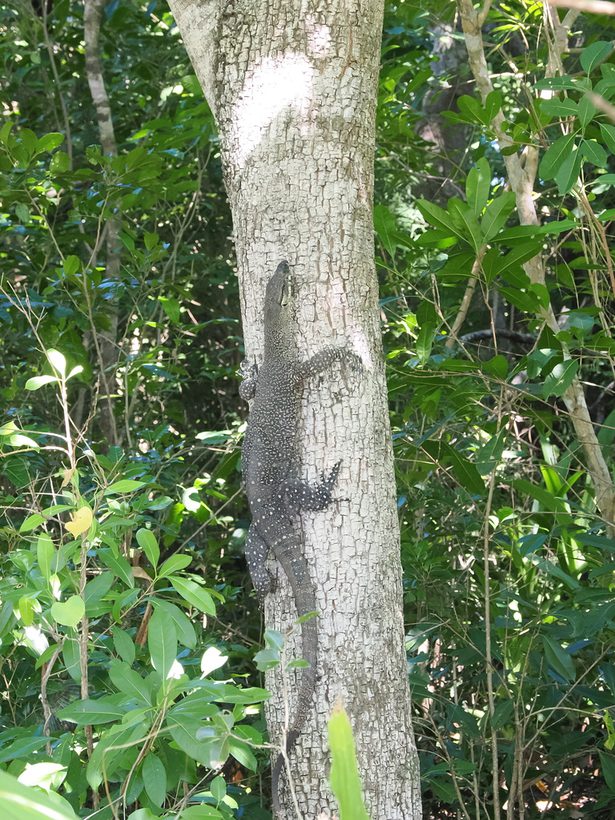
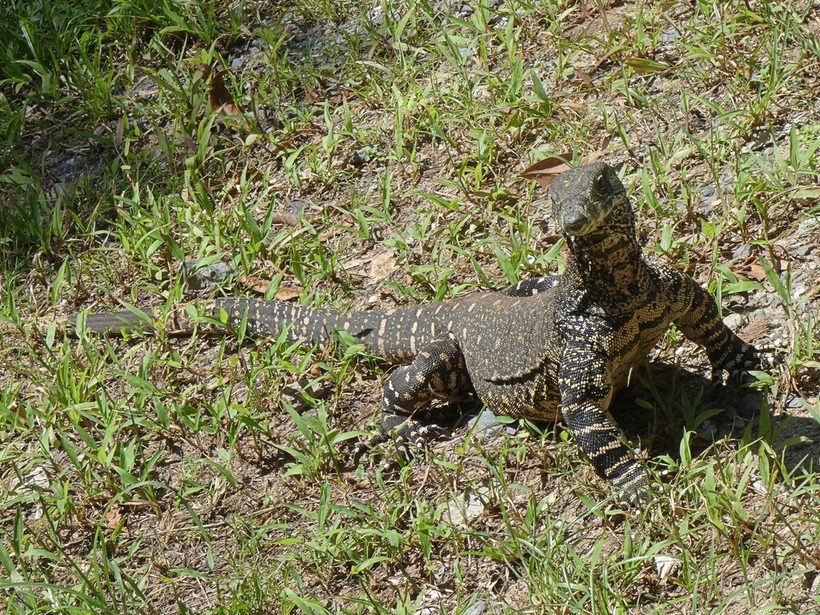
Photo: Lucas Christofides · CC BY 4.0 · iNaturalist
Photo: Lucas Christofides · CC BY 4.0 · iNaturalist
Photo: Kai Squires · CC BY 4.0 · iNaturalist
Asked on
most call-outs.
Are Lace Monitors dangerous?
Why did it run at me?
How do I keep one out of my chicken coop?
Will it hurt my dog?
One lives under my house — should I have it removed?
Is that a snake tongue?
Call or text — a licensed handler will talk you through it. If someone has been bitten, call 000 first.