
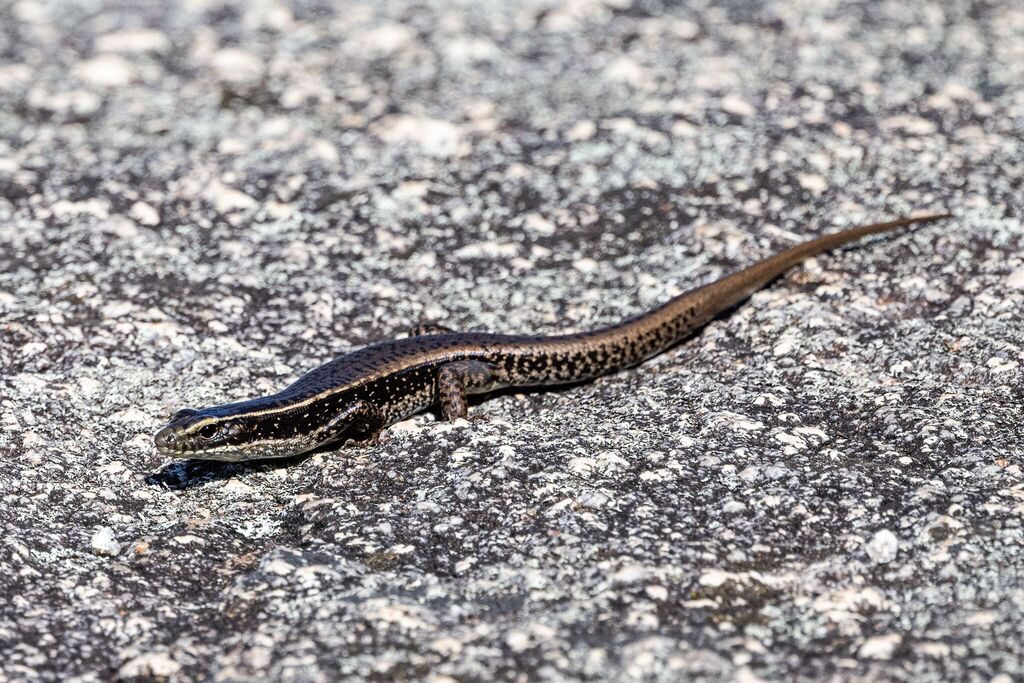
Photo: Alan Bell · CC BY 4.0 · iNaturalist
Eastern Water Skink
Eulamprus quoyii
Glossy bronze with a coppery gold stripe down each side. Basks in the open, then dives.
- Length
- to ~30 cm
- Active
- Diurnal
- Habitat
- Creek banks, garden ponds, rock walls near water
- Diet
- Insects, spiders, tadpoles
- Status
- Protected wildlife — licensed handlers only
Legless lizards are protected in Queensland exactly as snakes are. Taking, handling, moving, keeping or harming one without the appropriate permit is an offence under the Nature Conservation Act 1992, and penalties are substantial.
That applies whether or not you believed it was something else at the time. Killing a native reptile because you were unsure what it was is not a defence — and it is how a great many people are hurt by the ones that can hurt them.
If you cannot identify it, photograph it from a safe distance and send it to us. There is no penalty for asking.
The Eastern Water Skink is one of the most conspicuous lizards in South East Queensland — a glossy, alert, gold-striped skink that basks in the open on rocks, logs and garden edges near water.
It is completely harmless, and unlike most skinks it is bold enough to be watched properly. Many people have one living around a garden pond and never realise it is there until it dives in.
It is also a good sign: this species needs permanent water and clean margins, so a resident population usually means a healthy little patch of habitat.
About the Eastern Water Skink
Adults reach around 30 centimetres including the tail, with a slender, glossy body and well-developed legs.
The upper surface is olive-brown to bronze, scattered with black flecks and spots. The defining feature is a broad coppery-gold stripe running along each side from behind the eye to the base of the tail, edged in black.
The belly is pale cream to yellow, and the whole animal has a distinctly polished, glossy appearance quite unlike the matte finish of a garden skink.
Habitat
Where can you find an Eastern Water Skink?
As the name suggests, this species stays close to water:
- creek banks and rocky stream margins
- garden ponds and water features
- dams, drains and swimming pool surrounds
- rock walls and retaining walls near water
- logs and debris beside waterways
They bask on prominent perches with an escape route into the water, and will dive in and swim strongly when disturbed — sometimes staying submerged for a surprising length of time.
Venom
Is the Eastern Water Skink dangerous?
No. It is a harmless skink with no venom and no capacity to hurt anyone.
Its response to a threat is to bolt into water or cover. Handling one risks it dropping its tail, which costs it a significant amount of stored energy to regrow and is a good reason to admire it from where you are.
It is protected native wildlife, and moving one without a permit is an offence.
Diet
What does the Eastern Water Skink eat?
This is an active hunter that forages both on land and at the water's edge:
- insects and their larvae
- spiders and other invertebrates
- tadpoles and small aquatic animals
- occasionally soft fruit
They hunt by sight, and will chase prey across open ground with real speed.
Behaviour
What should you know about this species?
Eastern Water Skinks are strongly diurnal and bask conspicuously, which makes them one of the easiest reptiles in the region to watch.
They are territorial, and a good basking rock will usually belong to one dominant animal. Watch a pond edge for a while and the social arrangement becomes fairly obvious.
Cats are their main problem in suburban areas, along with the loss of rock, log and vegetation cover along garden waterways.
What to do if you see an Eastern Water Skink
Leave it be and enjoy having it. It needs nothing from you and it eats garden insects.
If you want more of them, leave rocks, logs and dense planting along pond and creek margins rather than clearing to bare edges. Cover is what they need most.
Call us if one is injured or has been caught by a pet — even an apparently unharmed lizard that a cat has had in its mouth needs attention, because the bacteria involved kill reptiles days later.
Contributed photographs, reused under Creative Commons licences. Colour and pattern vary a lot between individuals — compare several before settling on an ID.
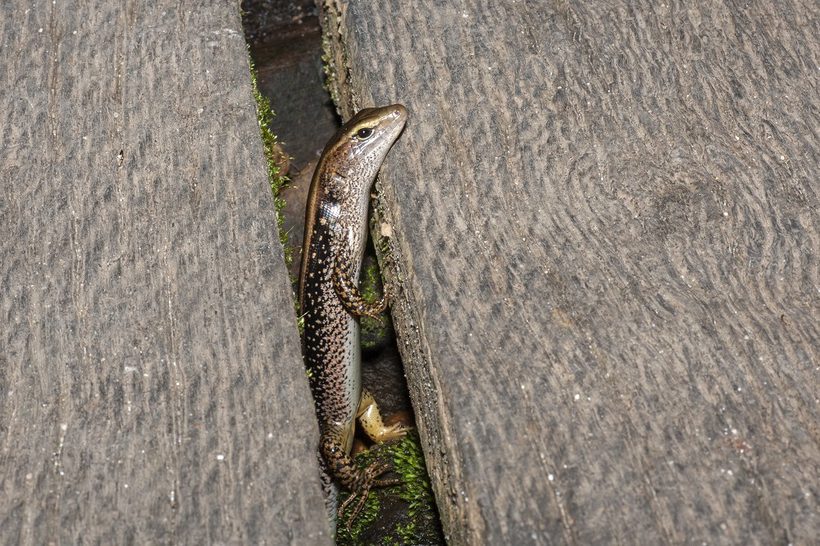
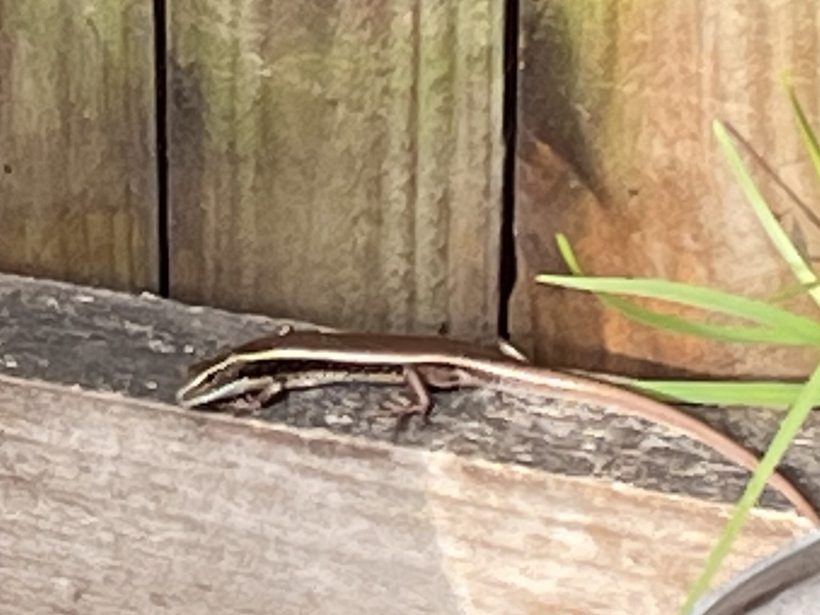
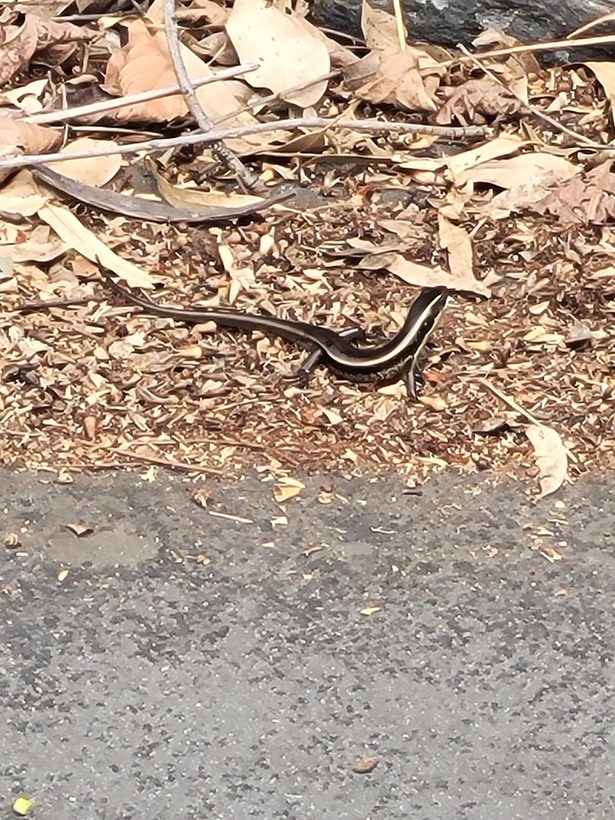
Photo: dhfischer · CC BY 4.0 · iNaturalist
Photo: Damian Larkin · CC BY 4.0 · iNaturalist
Photo: no rights reserved · CC0 · iNaturalist
Asked on
most call-outs.
How do you identify an Eastern Water Skink?
Is it dangerous?
Does it really swim?
How do I get more of them around my pond?
My cat brought one in. What should I do?
Why did it drop its tail?
Call or text — a licensed handler will talk you through it. If someone has been bitten, call 000 first.