
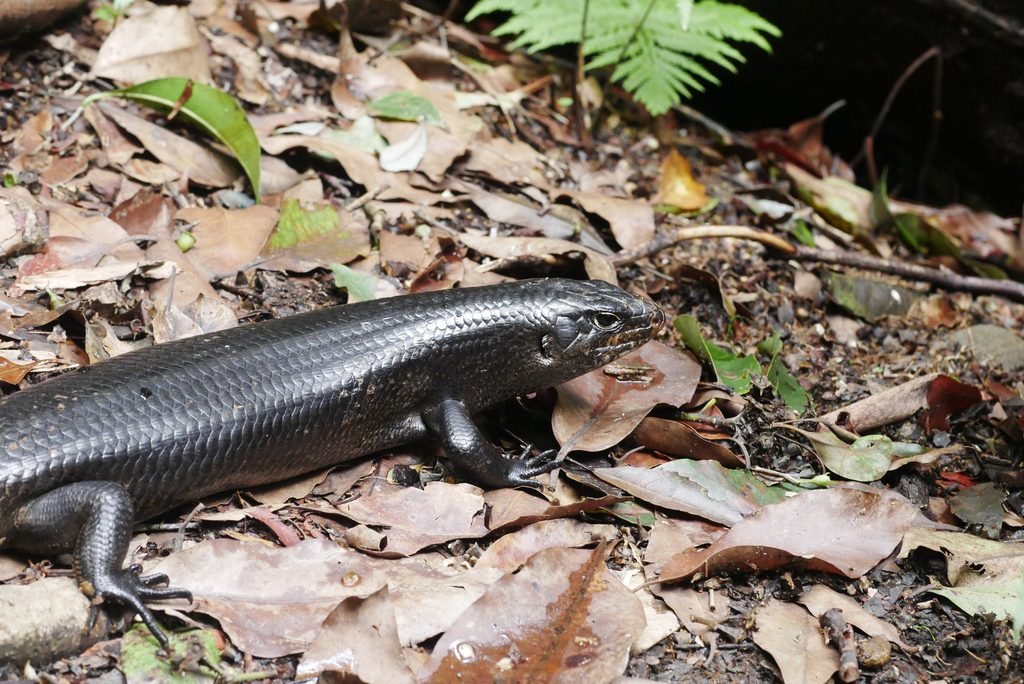
Photo: Lucas Christofides · CC BY 4.0 · iNaturalist
Land Mullet
Bellatorias major
One of the largest skinks on earth, glossy jet-black, and an SEQ speciality. Usually heard before seen.
- Length
- to ~60 cm
- Active
- Diurnal
- Habitat
- Rainforest, wet forest, hinterland tracks
- Diet
- Fruit, fungi, insects
- Status
- Protected wildlife — licensed handlers only
Compare before you decide. Never act on an identification made from a photo or a guide, including this one.
Legless lizards are protected in Queensland exactly as snakes are. Taking, handling, moving, keeping or harming one without the appropriate permit is an offence under the Nature Conservation Act 1992, and penalties are substantial.
That applies whether or not you believed it was something else at the time. Killing a native reptile because you were unsure what it was is not a defence — and it is how a great many people are hurt by the ones that can hurt them.
If you cannot identify it, photograph it from a safe distance and send it to us. There is no penalty for asking.
The Land Mullet is one of the largest skinks in the world and something of a South East Queensland speciality — its range barely extends beyond the subtropical rainforests of this region and northern New South Wales.
It is a big, glossy, jet-black lizard that lives on the rainforest floor, and most people meet one as a loud crash in the leaf litter as it bolts for cover.
It is completely harmless and, in a good year, surprisingly bold around picnic areas and rainforest walking tracks.
About the Land Mullet
Adults reach around 60 centimetres and are heavily built, with a thick body, well-developed legs and a long tapering tail.
The colour is unmistakable: a deep glossy black to very dark chocolate brown over the whole upper body, sometimes with fine pale flecking along the sides. The belly is pale grey to cream, occasionally with a yellowish wash.
The scales are large, smooth and highly polished, which is where the common name comes from — a wet-looking, fish-like sheen that is unlike any other lizard in the region.
Habitat
Where can you find a Land Mullet?
This species is tied closely to wet forest and is a good indicator of it:
- subtropical and warm-temperate rainforest
- wet sclerophyll forest and gullies
- rainforest margins and regrowth
- picnic areas and walking tracks in wet forest
- properties backing onto rainforest
They dig and maintain burrow systems under logs, root plates and rock piles, and a good site may be used by several animals. On the Sunshine Coast they are most likely to be seen in the hinterland rather than in coastal suburbs.
Venom
Is the Land Mullet dangerous?
No. It is a completely harmless skink with no venom and no interest in people.
Its response to a person is to run, loudly, into cover. A cornered animal may gape or attempt to bite, and given its size that would be a firm pinch, but the situation almost never arises because they are so quick to leave.
It is protected native wildlife under the Nature Conservation Act 1992, like every reptile in this guide.
Diet
What does the Land Mullet eat?
Land Mullets are omnivores that forage across the forest floor:
- fallen fruit and berries
- fungi
- insects and other invertebrates
- flowers and soft plant material
- carrion, occasionally
Fruit makes up a large share of the diet in season, and they play a genuine role in dispersing rainforest seeds.
Behaviour
What should you know about this species?
Land Mullets are diurnal and bask in sunny gaps and along track edges, retreating into burrows or under logs when disturbed.
They are wary and fast, and the usual encounter is auditory — a startling crash of leaf litter as a large black lizard disappears. People frequently assume they have disturbed something much bigger.
Where they are used to people, at picnic grounds and popular walking tracks, they can become quite confident and will approach for dropped food. Feeding them is not doing them a favour and should be avoided.
What to do if you see a Land Mullet
Enjoy it. This is a species worth stopping for, and it needs nothing from you.
Do not feed it, particularly at picnic areas. Habituated lizards lose their wariness, concentrate around people, and end up injured by dogs and cars.
Call us if one is injured, has been caught by a pet, or has been hit by a vehicle. As with all reptiles, a pet-caught animal needs attention even if it looks unhurt.
Contributed photographs, reused under Creative Commons licences. Colour and pattern vary a lot between individuals — compare several before settling on an ID.
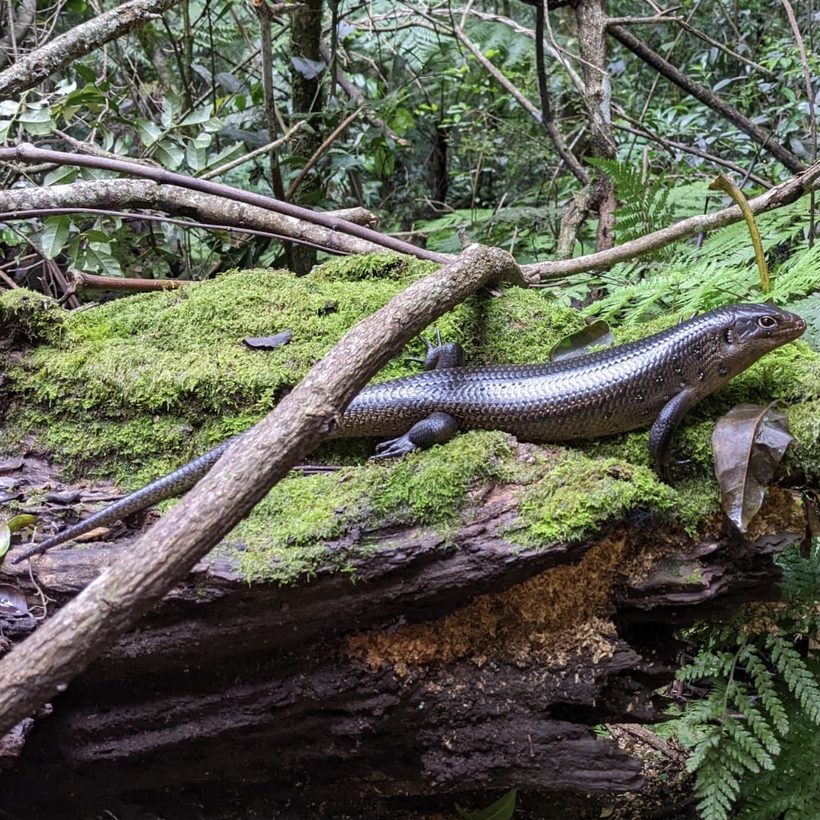
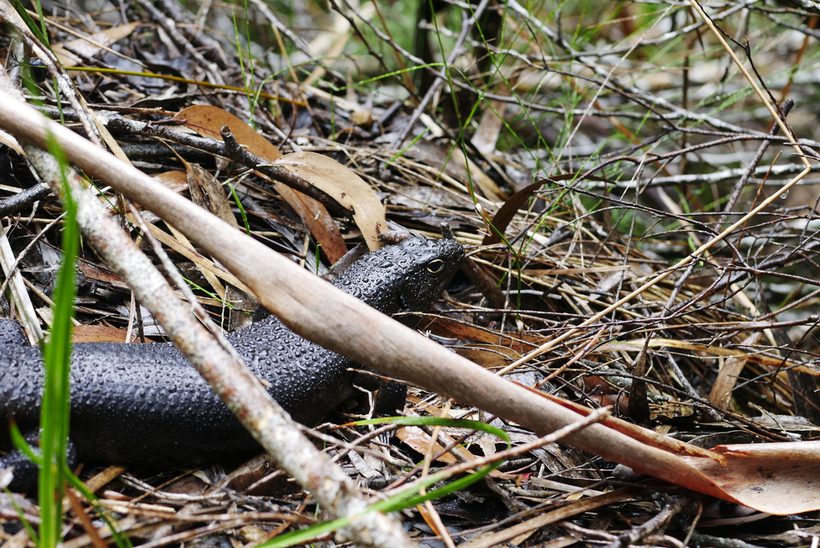
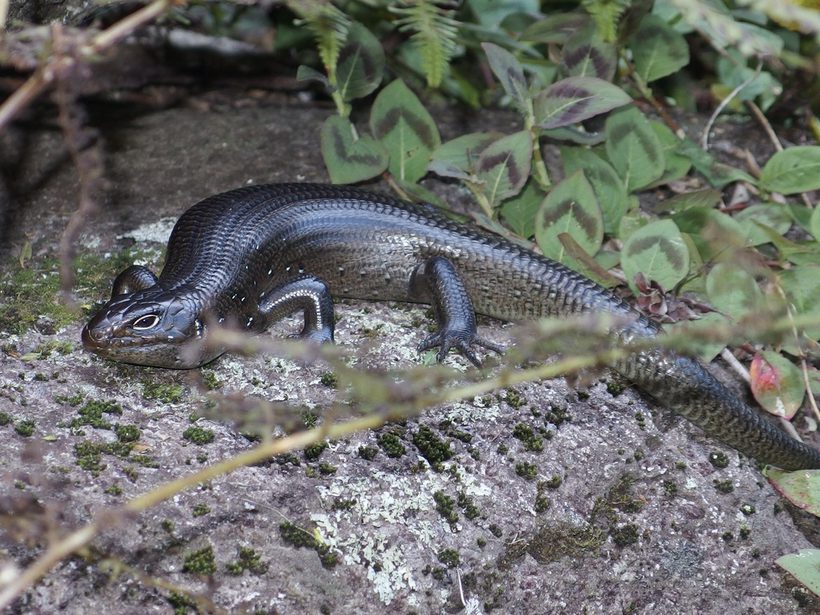
Photo: Sockrosma · CC BY 4.0 · iNaturalist
Photo: Lucas Christofides · CC BY 4.0 · iNaturalist
Photo: Sue Carnahan · CC BY 4.0 · iNaturalist
Asked on
most call-outs.
How do you identify a Land Mullet?
Is the Land Mullet dangerous?
Why is it called a mullet?
Where would I be likely to see one?
Can I feed them at picnic areas?
What was that huge crash in the leaf litter?
Call or text — a licensed handler will talk you through it. If someone has been bitten, call 000 first.