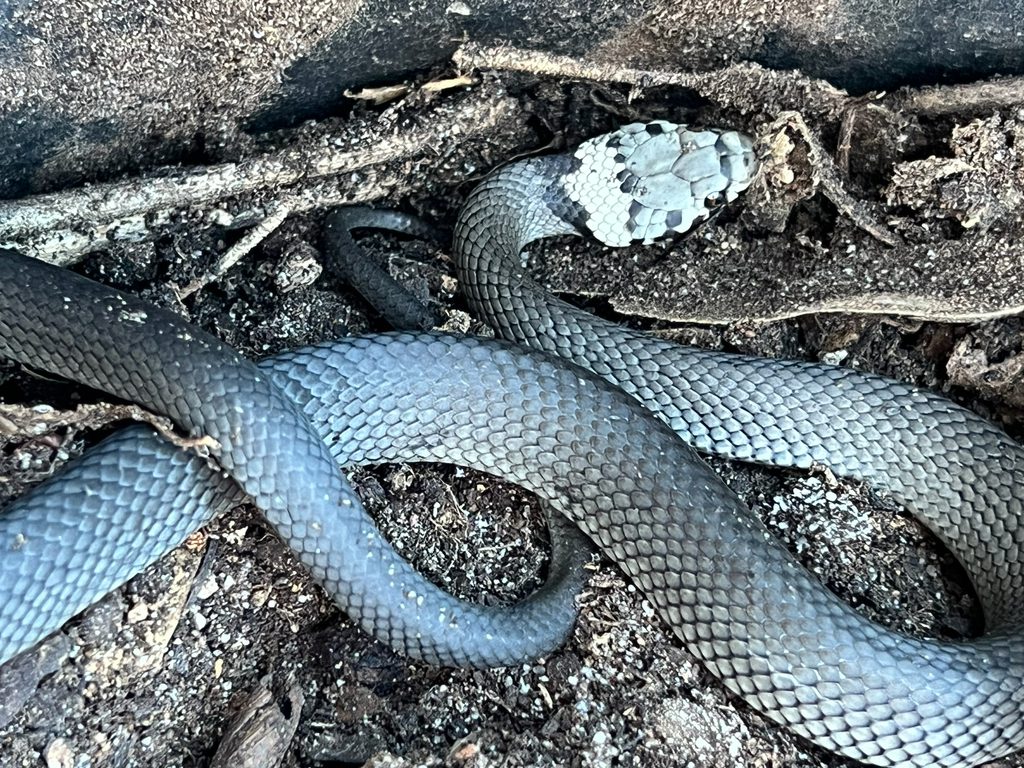
Photo: Alan Couch · CC BY 4.0 · iNaturalist
Pale-headed Snake
Hoplocephalus bitorquatus
Dangerously venomous, arboreal and uncommon. The species it resembles most is equally dangerous.
- Length
- 60–90 cm
- Active
- Nocturnal
- Habitat
- Dry woodland, hollow limbs, under loose bark
- Diet
- Frogs, geckos, small mammals
- Status
- Protected wildlife — licensed handlers only
Compare before you decide. Never act on an identification made from a photo or a guide, including this one.
Do not wash the bite, do not apply a tourniquet and do not try to catch the snake. Keep the person still, apply a pressure immobilisation bandage if you have one, and get emergency help immediately.
Native reptiles are protected wildlife. Taking, handling, moving or harming one without the appropriate permit is an offence under Queensland's Nature Conservation Act 1992 and carries significant penalties — as well as being the fastest way to get hurt.
The Pale-headed Snake is a dangerously venomous, largely arboreal species and a close relative of the Stephens' Banded Snake covered elsewhere in this guide. The two share a genus, a lifestyle and a general shape, and both are uncommon.
It is rarely encountered in South East Queensland. It is nocturnal, spends its days inside hollows and under loose bark, and occurs at low densities in habitat that is itself becoming scarce.
It is in the guide because it is dangerous and because the species it most resembles is also dangerous — there is no harmless outcome to getting this identification wrong.
About the Pale-headed Snake
Adults are usually 60 to 90 centimetres, moderately built, with a broad head clearly distinct from a narrow neck.
The body is grey to grey-brown, sometimes with faint darker bands. The head is distinctly paler than the body — off-white, cream or pale grey — and this contrast is the feature the species is named for.
Behind the pale head sits a dark band across the nape, and there is usually a pale cream bar along the side of the neck. The belly is grey, often with darker flecking.
Habitat
Where can you find a Pale-headed Snake?
This species is tied to trees, and particularly to trees with good hiding places:
- dry woodland and open forest
- riverine forest and creek lines
- river red gums and other rough-barked trees
- hollow limbs and standing dead timber
- loose or decorticating bark
It shelters by day under bark and inside hollows, which makes it vulnerable to firewood collection and the removal of dead trees. It is listed as threatened in parts of its range for exactly that reason.
Venom
Is the Pale-headed Snake dangerous?
Yes. The Pale-headed Snake is dangerously venomous, with venom that affects blood clotting and can cause serious systemic illness.
Bites are rare because encounters are rare, not because the species is harmless. Like its relative the Stephens' Banded Snake, it has a reputation for being readily defensive when disturbed, flattening the body and striking rather than retreating.
Treat any bite as a medical emergency. Apply a pressure immobilisation bandage, keep the person still, and call 000.
Diet
What does the Pale-headed Snake eat?
Prey reflects a life spent in and around trees:
- frogs
- geckos and other lizards
- small mammals
- small birds
It hunts at night, working along branches and trunks and dropping to the ground when necessary.
Behaviour
What should you know about this species?
Pale-headed Snakes are nocturnal and arboreal, spending daylight hours wedged under bark or inside hollow limbs and emerging after dark to hunt.
They are climbers, and encounters often happen above ground level — in a tree being pruned, in firewood being split, or under bark being pulled from a dead limb.
They are genuinely uncommon. Most snake catchers in South East Queensland will handle this species rarely, if at all.
What to do if you see a Pale-headed Snake
Back away and keep clear. Do not attempt to confirm the identification at close range — the alternative candidate is a Stephens' Banded Snake, which is equally dangerous.
If you have found it while working on a tree or splitting firewood, stop, put the tools down, and move away before doing anything else.
Call a licensed snake catcher. If the snake is inside a hollow or under bark it will very likely still be there when we arrive.
Contributed photographs, reused under Creative Commons licences. Colour and pattern vary a lot between individuals — compare several before settling on an ID.
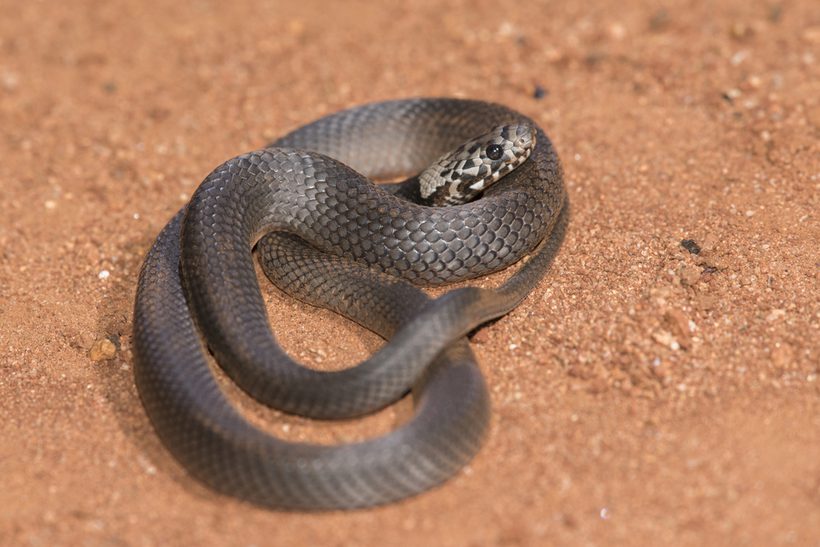
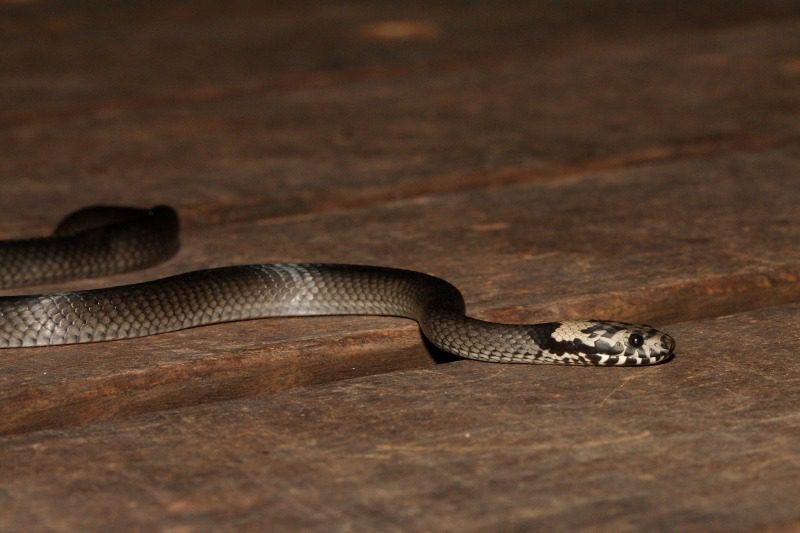
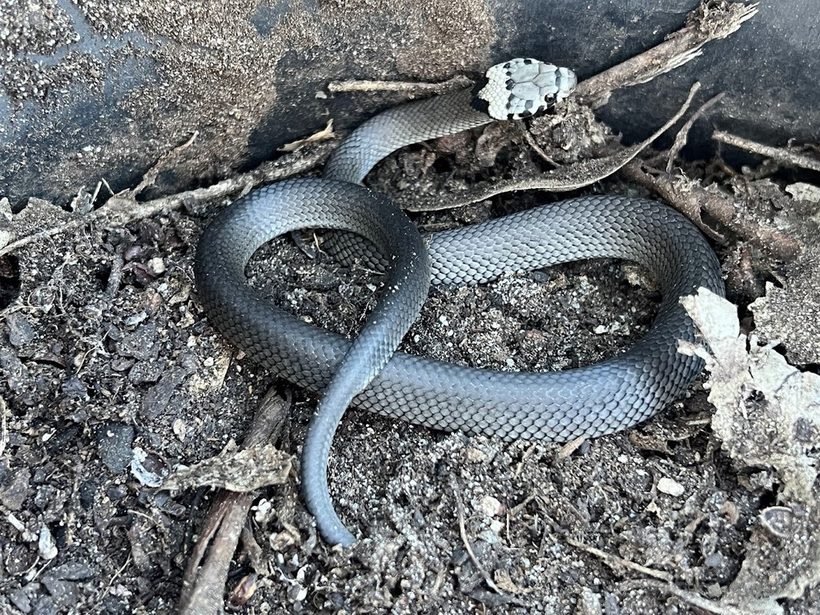
Photo: garywwilson · CC BY 4.0 · iNaturalist
Photo: dhfischer · CC BY 4.0 · iNaturalist
Photo: Alan Couch · CC BY 4.0 · iNaturalist
Asked on
most call-outs.
How do you identify a Pale-headed Snake?
How is it different from a Stephens' Banded Snake?
Is the Pale-headed Snake venomous?
Where would I be most likely to meet one?
Are they common in South East Queensland?
Why does removing dead trees matter to this species?
Call or text — a licensed handler will talk you through it. If someone has been bitten, call 000 first.