Photo: Ged Tranter · CC BY 4.0 · iNaturalist
Rough-scaled Snake
Tropidechis carinatus
Dangerously venomous, and a close match for the harmless Keelback. The most consequential mix-up in the guide.
- Length
- 60 cm – 1 m
- Active
- Day and night
- Habitat
- Rainforest, wet forest, creek banks, low vegetation
- Diet
- Frogs, lizards, small mammals, birds
- Status
- Protected wildlife — licensed handlers only
Compare before you decide. Never act on an identification made from a photo or a guide, including this one.
Do not wash the bite, do not apply a tourniquet and do not try to catch the snake. Keep the person still, apply a pressure immobilisation bandage if you have one, and get emergency help immediately.
Native reptiles are protected wildlife. Taking, handling, moving or harming one without the appropriate permit is an offence under Queensland's Nature Conservation Act 1992 and carries significant penalties — as well as being the fastest way to get hurt.
The Rough-scaled Snake is the species behind one of the most dangerous cases of mistaken identity in South East Queensland. It looks very similar to the completely harmless Keelback, it shares much of the same habitat, and it is dangerously venomous.
Both species have raised ridges — keels — along their scales, giving them a rough, matte texture rather than the smooth gloss of most snakes. Both are olive to brown with irregular darker banding. Both are found around creeks, wet forest and damp ground.
Telling them apart in the field is genuinely difficult, and it is not something we ask members of the public to attempt. If you find a rough-scaled, banded, brownish snake near water in South East Queensland, treat it as dangerous and call us.
About the Rough-scaled Snake
Rough-scaled Snakes are a moderately built species, usually between 60 centimetres and 1 metre in length, though larger individuals occur.
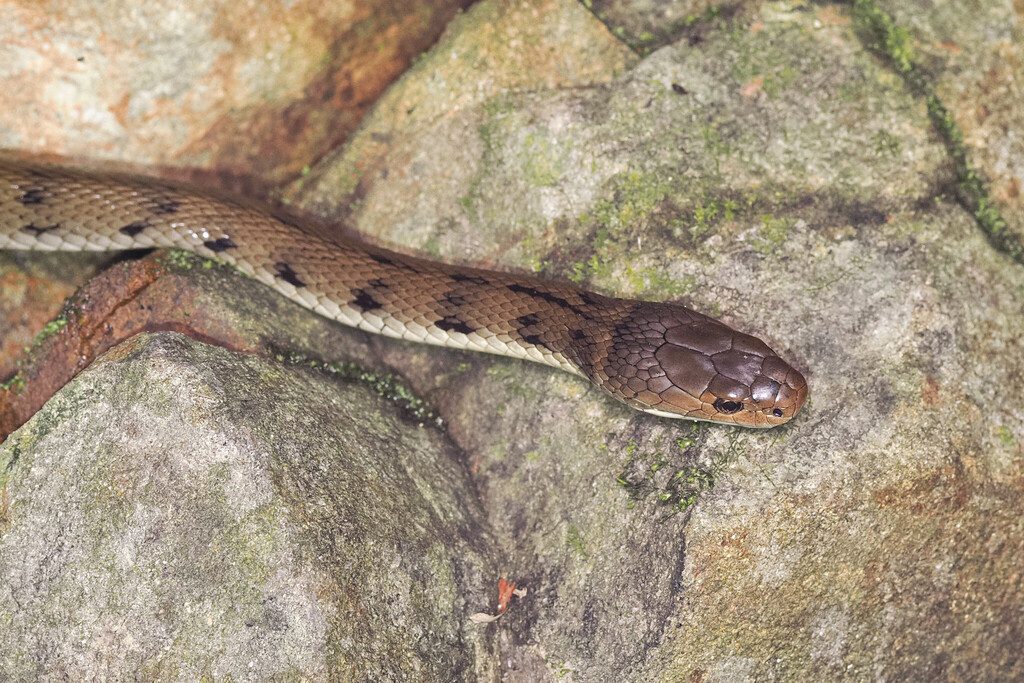
The body is olive, brown or greenish-brown, usually with irregular darker cross-bands that can be obvious on some animals and almost invisible on others. The belly is cream to olive-green.
The most distinctive feature is the scales themselves. Each dorsal scale carries a raised ridge down its centre, which gives the snake a rough, ridged appearance and a texture quite unlike the smooth, glossy look of an Eastern Brown or a Red-bellied Black.
Habitat
Where can you find a Rough-scaled Snake?
This species is restricted to wetter habitats along the east coast, and South East Queensland is well within its range. Typical habitats include:
- subtropical rainforest and its margins
- wet sclerophyll forest and gullies
- creek banks and dense streamside vegetation
- damp, thickly vegetated bushland
- gardens and properties adjoining wet forest
They are semi-arboreal and are regularly found off the ground, in low vegetation, shrubs and branches — which is one of the few useful behavioural differences from the ground-dwelling Keelback.
Venom
Is the Rough-scaled Snake dangerous?
Yes. The Rough-scaled Snake is dangerously venomous and any bite must be treated as a medical emergency.
The venom affects the nervous system, muscle tissue and blood clotting. Serious envenomations have been recorded, and this species has a reputation among handlers for being more readily defensive than many other Australian elapids.
Because it is so easily confused with the harmless Keelback, there is a real risk of someone handling one in the belief that it is safe. Never handle a snake on the basis of an identification made from a photo or a guide, including this one.
Apply a pressure immobilisation bandage, keep the person still, and call 000.
Diet
What does the Rough-scaled Snake eat?
Prey reflects the wet habitats this species lives in:
- frogs
- lizards and skinks
- small mammals
- birds and nestlings
They hunt both on the ground and up in vegetation, and are active by day and after dark depending on conditions.
Behaviour
What should you know about this species?
Rough-scaled Snakes are active in both the day and the night, with more nocturnal activity in warm weather. They climb well and are often encountered in low shrubs and streamside vegetation rather than on open ground.
They are more inclined to stand their ground than many species. A disturbed animal may flatten its body, hiss and strike readily rather than retreat, which is another reason this is not a snake to test an identification on.
Their range overlaps heavily with the Keelback's, and the two are regularly found in the same gully, on the same creek, in the same week.
What to do if you see a Rough-scaled Snake
Assume any rough-scaled, banded, olive-brown snake near water is this species, not a Keelback, and act accordingly. Move back and keep people and pets clear.
Do not attempt to identify it by getting closer, and never handle it. The whole reason this species matters is that the harmless lookalike leads people into exactly that mistake.
Call a licensed snake catcher. If we can see a photo taken from a safe distance, we can usually tell you which one you are dealing with before we arrive.
Contributed photographs, reused under Creative Commons licences. Colour and pattern vary a lot between individuals — compare several before settling on an ID.
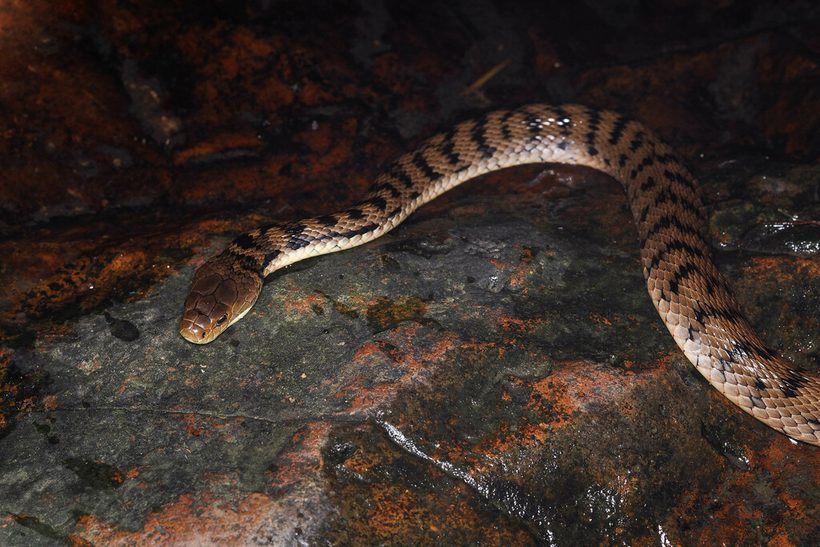
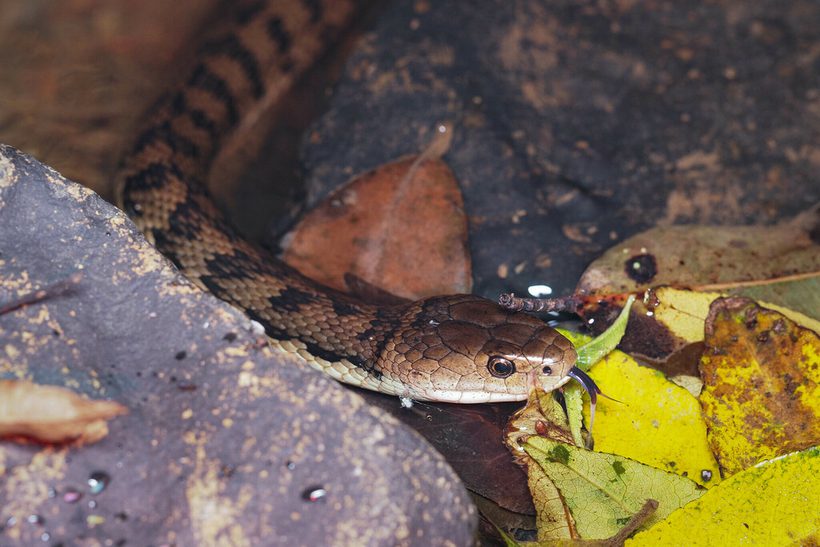
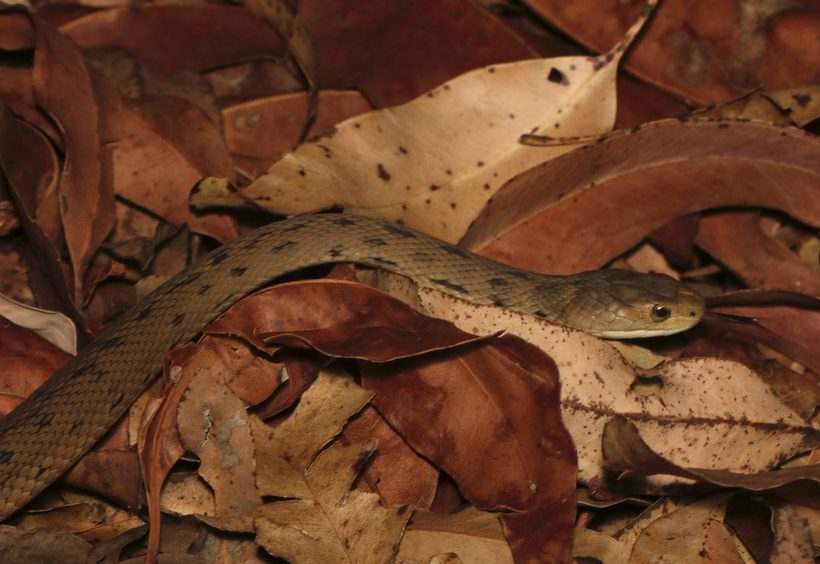
Photo: Ged Tranter · CC BY 4.0 · iNaturalist
Photo: Ged Tranter · CC BY 4.0 · iNaturalist
Photo: Ryan van Huyssteen · CC BY 4.0 · iNaturalist
Asked on
most call-outs.
How do you tell a Rough-scaled Snake from a Keelback?
Is the Rough-scaled Snake venomous?
How big do Rough-scaled Snakes get?
Do Rough-scaled Snakes climb?
Are they common on the Sunshine Coast?
Are Rough-scaled Snakes aggressive?
Call or text — a licensed handler will talk you through it. If someone has been bitten, call 000 first.