
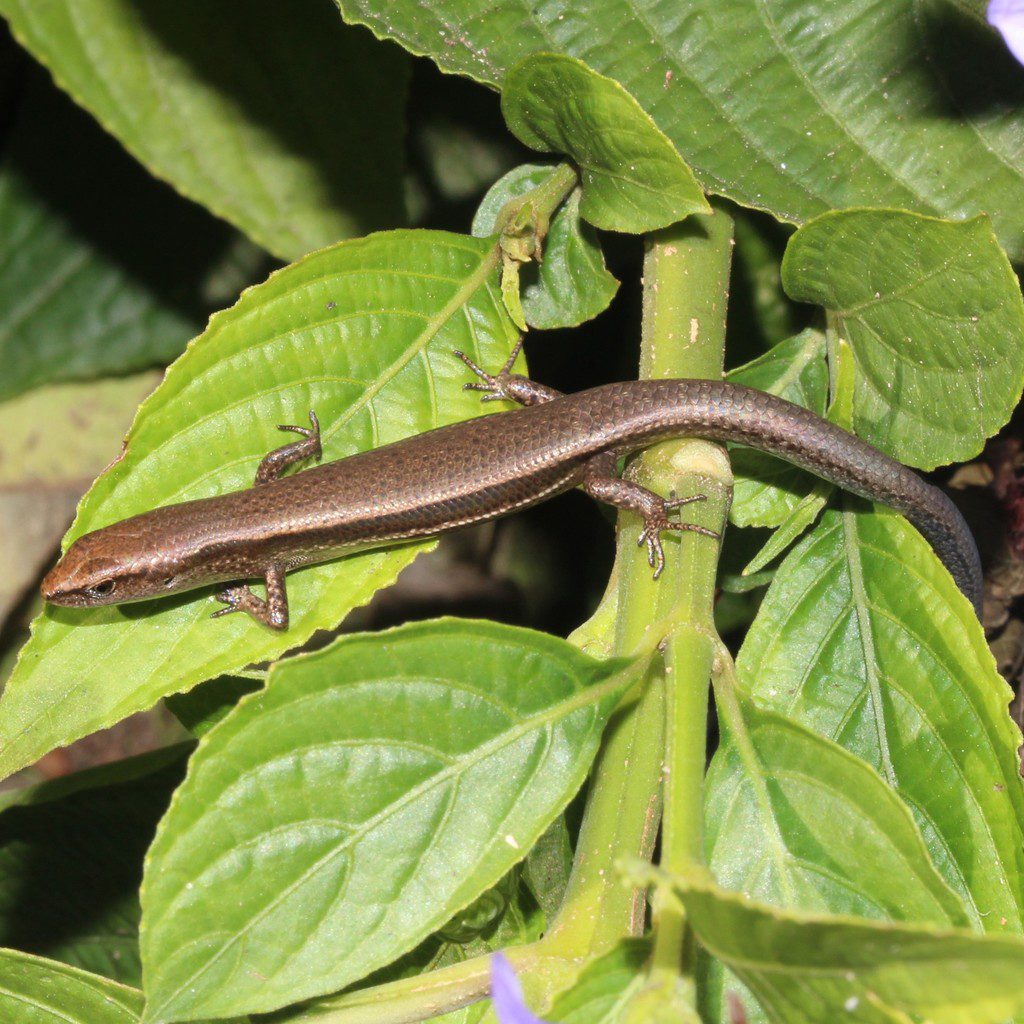
Photo: Natasha Taylor · CC BY 4.0 · iNaturalist
Garden Skink
Lampropholis delicata
The small brown lizard in every yard in SEQ — and the base of the food chain for half the snakes in this guide.
- Length
- to ~9 cm
- Active
- Diurnal
- Habitat
- Mulch, leaf litter, paving edges, lawns
- Diet
- Small insects, spiders
- Status
- Protected wildlife — licensed handlers only
Legless lizards are protected in Queensland exactly as snakes are. Taking, handling, moving, keeping or harming one without the appropriate permit is an offence under the Nature Conservation Act 1992, and penalties are substantial.
That applies whether or not you believed it was something else at the time. Killing a native reptile because you were unsure what it was is not a defence — and it is how a great many people are hurt by the ones that can hurt them.
If you cannot identify it, photograph it from a safe distance and send it to us. There is no penalty for asking.
The Garden Skink is the small brown lizard darting through the mulch in almost every yard in South East Queensland. It is the reptile people see most often and think about least.
It is entirely harmless, tiny, and one of the most useful animals in a garden — a single skink works through a great many small insects in a day.
It is in this guide for two reasons. Cats bring them in constantly, and their young are small enough and quick enough that people occasionally report them as something else.
About the Garden Skink
This is a very small lizard, usually around 9 centimetres in total length with the tail making up more than half of that.
The body is brown to bronze above, often with a coppery sheen and fine dark flecking, and there is usually a darker stripe running along each side with a paler line beneath it. The belly is pale cream to greyish, sometimes yellowish in breeding males.
The legs are small but obvious, the eyes are relatively large, and the whole animal is slender and quick. There is no mistaking it for anything dangerous once you have had a proper look.
Habitat
Where can you find a Garden Skink?
Almost anywhere with cover and sun:
- garden beds, mulch and leaf litter
- lawns, paths and paving edges
- rockeries, pots and garden edging
- compost heaps
- open woodland and grassland
They are among the most successful reptiles in suburban Australia and are perfectly happy in a small, well-mulched suburban yard.
Venom
Is the Garden Skink dangerous?
No. It has no venom, and at this size it could not hurt a person if it wanted to.
If caught, it will usually shed its tail — the detached tail keeps wriggling to distract the predator while the lizard escapes. It regrows, but never quite the same, and it costs the animal a great deal of stored energy.
It is protected native wildlife, the same as every other reptile here.
Diet
What does the Garden Skink eat?
Small invertebrates, in significant numbers:
- small insects and their larvae
- spiders
- slaters and other small invertebrates
- occasionally soft fruit
They forage constantly through litter and low vegetation during the warmer parts of the day.
Behaviour
What should you know about this species?
Garden Skinks are diurnal and highly active, basking briefly and then foraging in short bursts. They are quick, wary, and rarely stay still for long.
They are also the base of a considerable food chain. Most of the small snakes in this guide — the crowned snakes, the red-naped snake, Burton's Legless Lizard — eat little else. A garden with skinks supports far more than skinks.
Cats are by far their biggest threat in suburban areas.
What to do if you see a Garden Skink
Nothing at all. It belongs there and it is working for you.
If you want more of them, leave leaf litter and mulch rather than clearing to bare soil, and keep cats in — particularly at dawn and dusk.
If a cat has caught one, it needs help even if it looks intact. Cat bites are almost always fatal to small reptiles without treatment, because of the bacteria involved rather than the injury itself.
Contributed photographs, reused under Creative Commons licences. Colour and pattern vary a lot between individuals — compare several before settling on an ID.
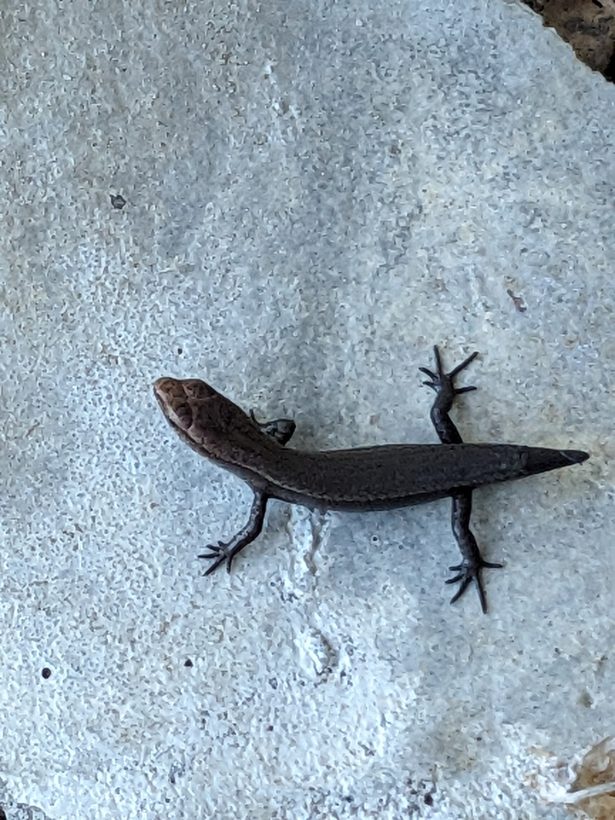
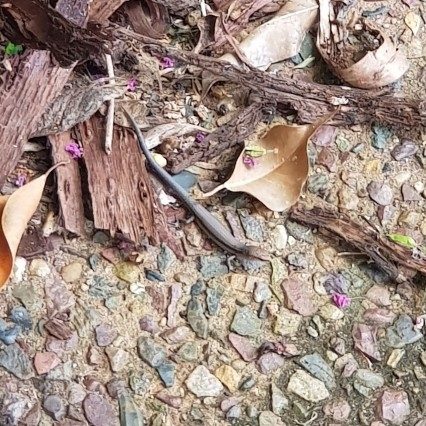
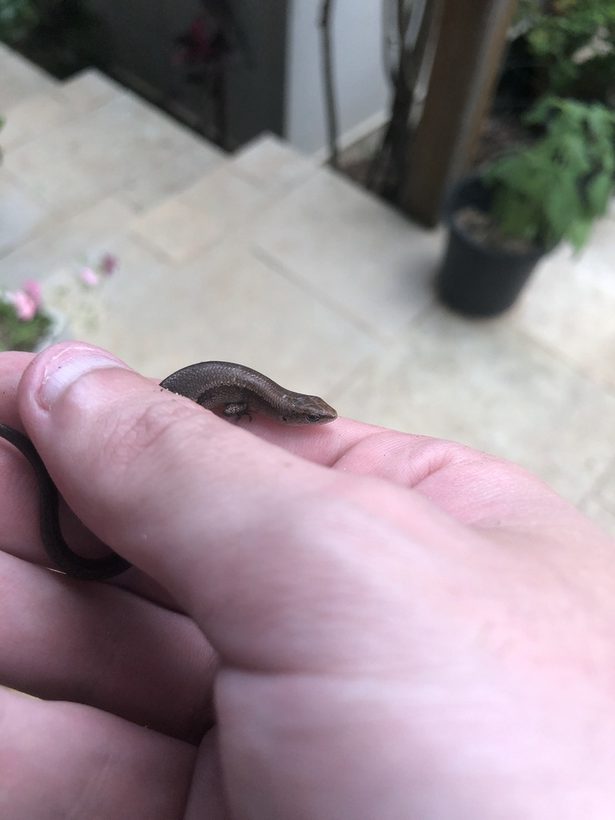
Photo: no rights reserved · CC0 · iNaturalist
Photo: Natasha Taylor · CC BY 4.0 · iNaturalist
Photo: Sam Westbrook · CC BY 4.0 · iNaturalist
Asked on
most call-outs.
What is the small brown lizard in my garden?
Are Garden Skinks harmful?
Why did its tail come off?
My cat keeps catching them. Does it matter?
How do I get more of them?
Could it be a baby snake?
Call or text — a licensed handler will talk you through it. If someone has been bitten, call 000 first.