
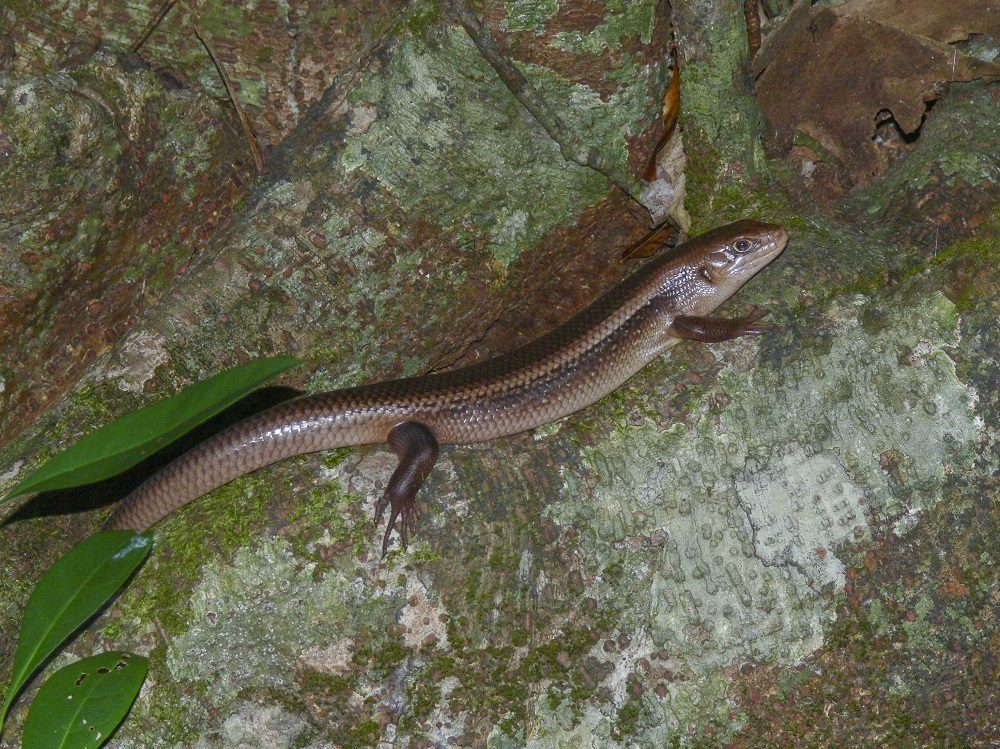
Photo: dhfischer · CC BY 4.0 · iNaturalist
Major Skink
Bellatorias frerei
Robust, glossy and coppery, living in shared burrow systems. Rarely more than a dash from cover.
- Length
- to ~40 cm
- Active
- Diurnal
- Habitat
- Rock walls, rubble, under sheds, coastal scrub
- Diet
- Insects, fruit, plant material
- Status
- Protected wildlife — licensed handlers only
Compare before you decide. Never act on an identification made from a photo or a guide, including this one.
Legless lizards are protected in Queensland exactly as snakes are. Taking, handling, moving, keeping or harming one without the appropriate permit is an offence under the Nature Conservation Act 1992, and penalties are substantial.
That applies whether or not you believed it was something else at the time. Killing a native reptile because you were unsure what it was is not a defence — and it is how a great many people are hurt by the ones that can hurt them.
If you cannot identify it, photograph it from a safe distance and send it to us. There is no penalty for asking.
The Major Skink is a large, robust, richly coloured skink found through eastern Queensland, including parts of South East Queensland. It is a close relative of the Land Mullet and shares much of its build, though it is smaller and far more warmly coloured.
It is completely harmless and reasonably shy, and is most often seen basking near the entrance to a burrow or a rock crevice before disappearing into it.
It is less commonly encountered than the other skinks in this guide, and tends to be reported when one takes up residence under a shed or a rock wall.
About the Major Skink
Adults reach around 40 centimetres, heavily built with strong limbs and a thick tail.
The upper body is a rich chocolate to coppery brown, often with a distinctly golden or bronze sheen and fine pale flecking along the sides. The flanks are usually darker than the back, and the belly is cream to yellowish.
The scales are large, smooth and glossy — the same polished quality as its relative the Land Mullet, but on a warmer, browner animal.
Habitat
Where can you find a Major Skink?
This species likes structure it can retreat into:
- rainforest margins and vine thicket
- open forest with rock outcrops
- coastal scrub and dune systems
- rock walls, stacked timber and rubble
- under sheds, decks and buildings
They live in burrow systems and rock crevices, often in small groups, and rarely stray far from the entrance. A basking Major Skink is almost always within a metre of somewhere it can vanish.
Venom
Is the Major Skink dangerous?
No. It has no venom and no interest in confrontation.
Its response to disturbance is to disappear into cover, quickly. A cornered animal may gape or attempt to bite and, at this size, could deliver a firm pinch — but it would take some determined effort to get to that point.
It is protected native wildlife under the Nature Conservation Act 1992.
Diet
What does the Major Skink eat?
An omnivore, with the balance shifting by season:
- insects and other invertebrates
- soft fruit and berries
- flowers and plant material
- occasionally carrion
They forage close to their retreats rather than ranging widely, working over the ground and low vegetation within a short dash of cover.
Behaviour
What should you know about this species?
Major Skinks are diurnal and bask near burrow entrances, often on warm rock or timber, retreating at the first sign of movement.
They are social to a degree unusual among skinks — burrow systems are often shared, and several animals may bask within sight of one another.
Because they favour rock walls, rubble and the space under buildings, they end up living alongside people fairly often, which is generally uneventful for everybody.
What to do if you see a Major Skink
Leave it be. A skink living under a rock wall or a shed is causing no problem and needs nothing from you.
If you would rather it moved on, removing the rubble and timber it shelters in will do it — but that is habitat for a great deal else besides, so it is worth considering whether the lizard was actually a problem.
Call us if one is injured, trapped, or has been caught by a pet.
Contributed photographs, reused under Creative Commons licences. Colour and pattern vary a lot between individuals — compare several before settling on an ID.
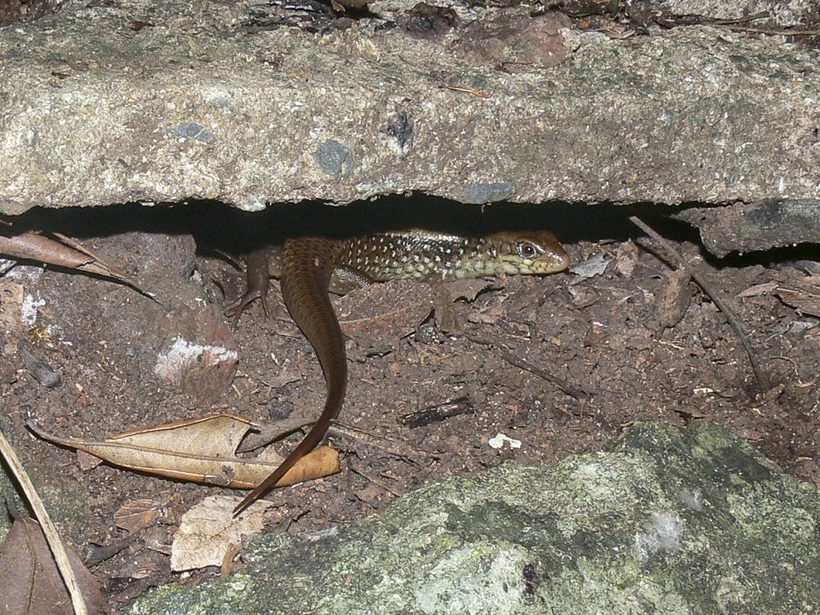
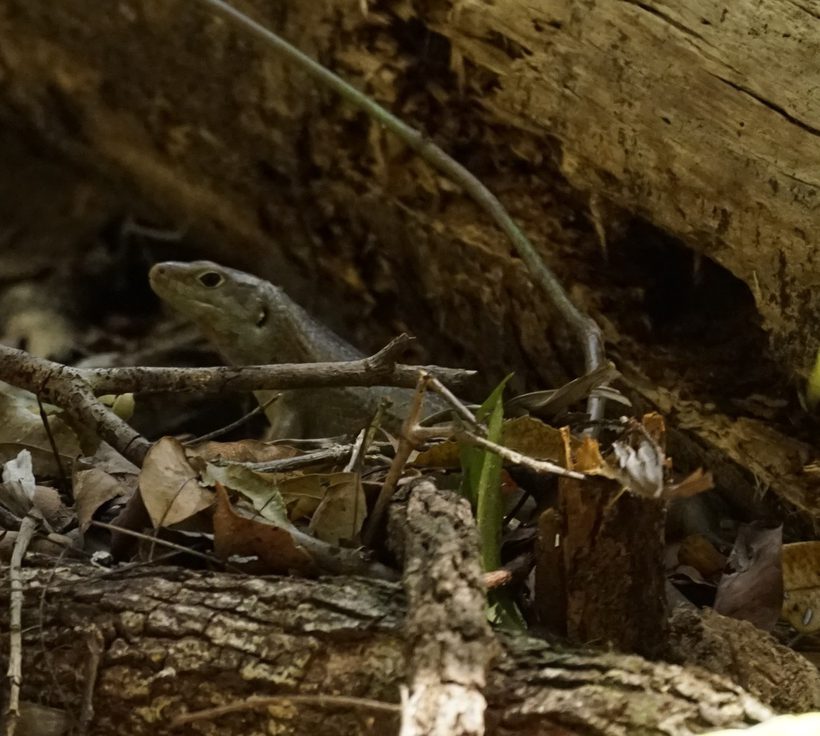
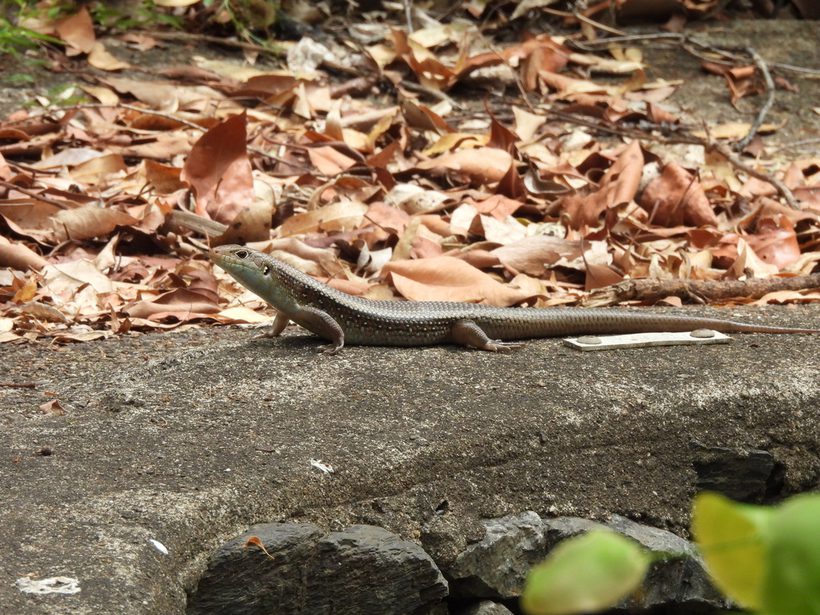
Photo: dhfischer · CC BY 4.0 · iNaturalist
Photo: Tim · CC BY 4.0 · iNaturalist
Photo: Mark Clarke · CC BY 4.0 · iNaturalist
Asked on
most call-outs.
How do you identify a Major Skink?
How is it different from a Land Mullet?
Is the Major Skink dangerous?
One lives under my shed — is that a problem?
Why are there several in one spot?
How do I encourage them?
Call or text — a licensed handler will talk you through it. If someone has been bitten, call 000 first.